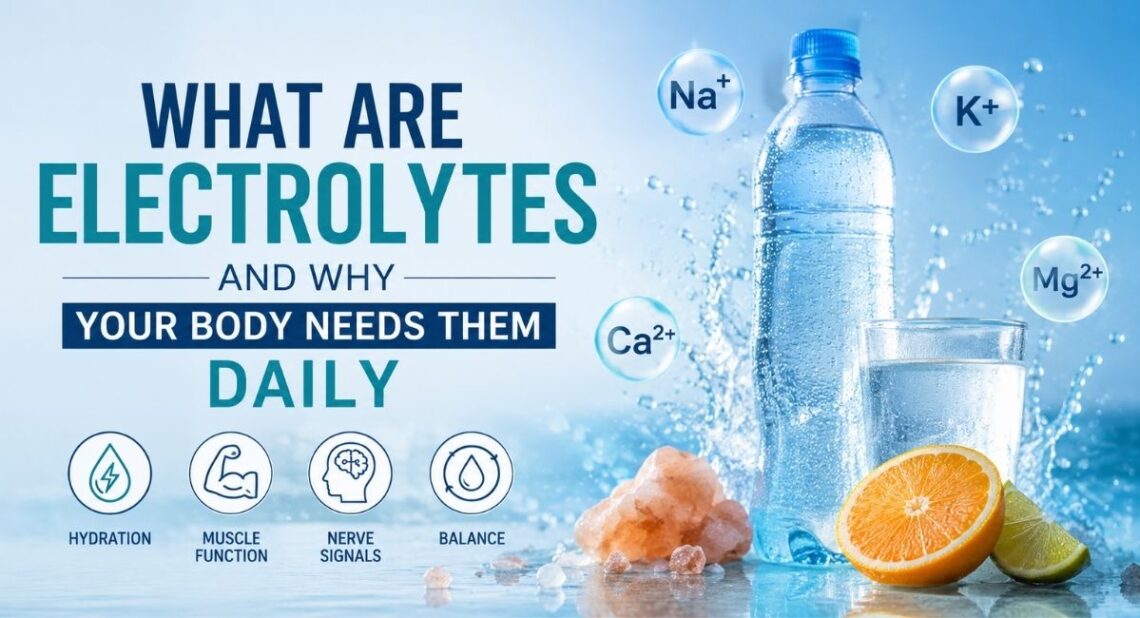
You drink a full glass of water, then another, and another, and yet the headache does not lift. Your legs feel heavy halfway through a walk. You wake up with a dull, foggy feeling even though you slept a full eight hours and stayed hydrated all day. If this sounds familiar, the problem is often not how much water you are drinking. It is what is missing from that water.
Plain water hydrates you, but it does not carry the minerals your cells actually depend on to function. Those minerals are electrolytes, and without enough of them, water passes through your system without doing its full job. This is one of the more overlooked pieces of the hydration conversation, and it explains why some people drink plenty of water and still feel drained, foggy, or crampy by the end of the day.
Electrolytes have moved from a niche sports nutrition topic into everyday wellness conversations, and for good reason. As more people pay attention to how they feel day to day, not just how much water they consume, electrolyte balance has become a practical piece of the puzzle rather than something only athletes need to think about. This article breaks down what electrolytes are, what they actually do inside your body, the signs that your levels may be low, and practical ways to keep them balanced without overcomplicating your routine.
What Are Electrolytes, Exactly?
Electrolytes are minerals that carry an electrical charge when dissolved in your blood and other body fluids. That charge is not a minor detail. It is the reason your heart beats in a steady rhythm, your muscles contract when you want them to, and your nerves can send signals from your brain to the rest of your body in a fraction of a second.
The main electrolytes your body relies on are sodium, potassium, magnesium, calcium, chloride, phosphate, and bicarbonate. Each one plays a distinct role, and they often work together rather than independently. Sodium and potassium, for example, move in and out of your cells constantly to maintain what is called cellular hydration, the balance of fluid inside versus outside each cell. When that balance shifts too far in either direction, cells cannot function normally, which is part of why even mild electrolyte imbalance can leave you feeling off in ways that are hard to pin down.
According to the Cleveland Clinic, an adult body is roughly 60 percent water, which means nearly every fluid and cell in the body contains electrolytes in some form. You can read a full breakdown of how these minerals are measured and regulated in their overview of electrolytes and normal levels, which is a useful reference if you want the clinical detail behind what follows here.
The Key Electrolytes Your Body Relies On
Not all electrolytes get equal attention, but each one has a specific job. Understanding what each mineral does makes it much easier to notice when something feels off and to make sense of why certain foods or drinks are recommended for replenishment.
| Electrolyte | Primary Role in the Body | Common Food Sources |
| Sodium | Regulates fluid balance, supports nerve signals and muscle function | Table salt, broth, pickles, cheese |
| Potassium | Supports heart rhythm, nerve function, and moves nutrients into cells | Bananas, potatoes, spinach, oranges |
| Magnesium | Aids muscle relaxation, energy production, and nervous system function | Almonds, pumpkin seeds, dark chocolate, leafy greens |
| Calcium | Supports muscle contraction, blood clotting, and nerve signaling | Dairy products, fortified plant milk, tofu, sardines |
| Chloride | Works with sodium to maintain fluid and blood pressure balance | Table salt, seaweed, tomatoes, olives |
Sodium and potassium tend to get the most attention because they are lost quickly through sweat, but magnesium deserves more credit than it usually gets. It is involved in hundreds of processes in the body, from muscle relaxation to converting food into usable energy, and low magnesium intake is more common than most people realize, particularly in diets low in leafy greens, nuts, and seeds.
What Do Electrolytes Do for Your Body
The short answer is that electrolytes keep your body’s basic electrical and fluid systems running correctly. The longer answer explains why that matters in everyday life, not just during intense exercise.
Every time your heart beats, it relies on a coordinated electrical signal driven largely by sodium, potassium, and calcium moving across heart cell membranes in a precise sequence. The same principle applies to every muscle contraction in your body, from blinking your eyes to climbing a flight of stairs. Nerve signals, the messages that travel from your brain to your muscles and back, depend on electrolytes to carry that electrical charge quickly and accurately.
Electrolytes also regulate fluid balance at the cellular level. This is where the connection to hydration becomes clear. Water alone does not know where to go inside your body. Electrolytes, particularly sodium, act like traffic signals, directing water to move into or out of cells as needed. Without enough sodium and potassium, the water you drink is more likely to pass through your system without adequately hydrating your cells, which is part of why drinking large amounts of plain water does not always solve fatigue or cramping the way people expect.
Beyond fluid and muscle function, electrolytes also help maintain your blood’s pH balance, largely through bicarbonate, and support bone health through calcium and magnesium working together. In short, very little in your body operates without electrolytes playing some background role.
Signs You Need More Electrolytes
Electrolyte imbalance does not always announce itself clearly. Mild depletion tends to show up as a collection of small, easy-to-dismiss symptoms rather than one obvious warning sign. Some of the more common indicators include the following.
- Muscle cramps or twitching, particularly in the calves or feet, especially after exercise or heat exposure
- Persistent fatigue or brain fog that does not improve after adequate sleep
- Headaches that appear despite drinking what feels like enough water throughout the day
- Dizziness or lightheadedness when standing up quickly
These symptoms can overlap with plenty of other causes, which is exactly why electrolyte balance is easy to overlook. If you already track your daily water intake and still notice these symptoms regularly, low electrolyte levels are worth considering as a contributing factor rather than assuming you simply need to drink more water.
It is worth noting that severe electrolyte imbalances, involving symptoms like an irregular heartbeat, confusion, seizures, or fainting, are medical emergencies and require immediate attention rather than a home remedy. The signs described above refer to the more common, mild fluctuations most people experience through diet, activity, or heat, not a diagnosable medical condition.
Electrolytes vs Plain Water: Why Hydration Is Not Just H2O
Most people equate hydration with water intake alone, and while water is essential, it is only part of the picture. Water without electrolytes can actually dilute the concentration of minerals already in your bloodstream if consumed in very large quantities over a short period, which is why endurance athletes are cautioned against drinking excessive plain water during long events without replacing sodium.
This distinction matters for everyday life too, not just for athletes. If you have ever felt like you were drinking water all day without feeling properly hydrated, the missing piece is often mineral balance rather than volume. This connects directly to how hydration affects mental clarity, since both water and electrolyte balance influence how alert and focused you feel throughout the day. It also ties into what actually happens at a physiological level when hydration is inadequate, which is covered in more detail in the explanation of what happens to your brain when you do not drink enough water.
The practical takeaway is straightforward. Water quantity and mineral balance work together, not separately, and focusing on only one while ignoring the other can leave you feeling only partially hydrated even when you are technically drinking enough fluid.
Who Is Most at Risk of Electrolyte Imbalance
Certain habits and circumstances increase the likelihood of running low on electrolytes, even in otherwise healthy people.
People who exercise regularly, particularly in hot or humid conditions, lose sodium and other minerals through sweat at a rate that plain water alone does not replace. This is especially relevant for anyone doing sustained physical activity, including low-impact options like water workouts for joint health, where the cooling effect of water can mask how much you are actually sweating and losing minerals during the session.
People following very low carbohydrate diets are also more prone to electrolyte shifts, since reduced carbohydrate intake changes how the kidneys handle sodium, often leading to increased sodium loss in the first few weeks of the diet. This is a well documented effect sometimes referred to informally as the keto flu, and it typically improves once electrolyte intake is adjusted to match the new dietary pattern.
Illness involving vomiting or diarrhea, certain medications like diuretics, and simply not eating a varied diet rich in fruits, vegetables, and whole foods can all contribute to lower electrolyte levels over time. Older adults are also more susceptible, partly due to reduced thirst sensation and, in some cases, medication use that affects mineral balance.
How to Get Electrolytes Naturally Through Food
For most people, the most reliable and cost effective way to maintain electrolyte balance is through a varied diet rather than relying solely on supplements or specialty drinks. Bananas, oranges, and potatoes are well known potassium sources. Leafy greens, nuts, and seeds provide magnesium. Dairy products and fortified plant alternatives supply calcium, while ordinary table salt and foods like broth cover sodium and chloride needs for most people without any special effort.
This is also where the connection between eating habits and hydration becomes practical rather than abstract. Building meals around a mix of fruits, vegetables, and whole foods naturally supports both hydration and electrolyte balance at the same time, since many of these foods also carry significant water content. A steady, food-based approach tends to be more sustainable long term than relying on drinks or supplements alone, and it avoids the added sugar that comes with many commercial electrolyte products.
Electrolyte Drinks: What to Look For
Electrolyte drinks and powders have become widely available, but not all of them are created equal, and more is not automatically better. Many popular sports drinks contain useful amounts of sodium and potassium, but also significant added sugar, which is unnecessary for someone who is not engaging in prolonged, intense exercise.
When choosing an electrolyte drink or supplement, a few things are worth checking. Look at the sodium content relative to your actual sweat loss and activity level rather than assuming a higher number is always better. Check whether the product contains added sugar and how much, since many electrolyte products are marketed around hydration but function more like sweetened beverages. Consider whether you actually need a specialized product at all, since for light daily activity, a pinch of salt and a piece of fruit can often achieve a similar effect without any packaging or added cost.
For people managing broader wellness goals, including reduced sugar and cleaner eating habits, it is worth applying the same scrutiny to electrolyte drinks that you would to any other packaged product, checking labels rather than assuming a wellness marketing claim reflects the full ingredient picture.
How Electrolytes Affect Sleep, Mood, and Recovery
Electrolyte balance influences more than physical performance. Magnesium in particular plays a role in nervous system regulation, and low magnesium levels have been associated with disrupted sleep and increased muscle tension at night. This connects naturally to broader evening routines, including the water and mineral habits covered in guidance on evening hydration and sleep routines, where small adjustments to fluid and mineral intake before bed can support more consistent rest.
Recovery after physical activity is another area where electrolytes matter directly. Muscles depend on calcium, magnesium, and potassium to relax properly after contraction, and inadequate levels of these minerals can contribute to prolonged soreness or cramping after exercise. This is one reason electrolyte replenishment is often paired with other water based recovery techniques, since both approaches work toward the same goal of helping the body reset after physical exertion.
Even mood can be affected indirectly. Persistent fatigue and brain fog, both associated with electrolyte imbalance, naturally influence motivation, focus, and overall sense of wellbeing throughout the day, even when the root cause is something as basic as mineral balance rather than a more complex issue.
Common Myths About Electrolytes
A few misunderstandings tend to follow electrolytes around, and clearing them up helps put this topic into proper context rather than treating it as another wellness trend to chase without reason.
One common myth is that everyone needs a specialized electrolyte drink daily to stay healthy. In reality, most people with a varied diet and normal activity levels get sufficient electrolytes from food alone, and specialized products are most useful during intense exercise, heat exposure, or illness rather than as a daily default. Another myth is that more electrolytes are always better. Excess sodium intake, for example, is associated with increased blood pressure in sensitive individuals, so balance matters more than maximizing intake. These misconceptions sit alongside other widespread misunderstandings covered in the broader look at common hydration myths, which is worth reading if you want a fuller picture of where hydration advice tends to go wrong.
How to Build Daily Electrolyte Balance Into Your Routine
Maintaining electrolyte balance does not require a complicated system. A few consistent habits cover most people’s needs without much extra effort. Eat a variety of whole foods that naturally include potassium, magnesium, sodium, and calcium rather than relying on any single source. Pay attention to activity level and climate, adjusting fluid and mineral intake upward during exercise, hot weather, or illness. Notice patterns in symptoms like fatigue, cramping, or headaches, and consider mineral balance as one possible explanation rather than assuming water alone will resolve them.
For most people, this means no dramatic changes are necessary, just slightly more attention to what is on the plate alongside what is in the glass. Electrolyte balance works best as a background habit rather than something you actively think about every day, which is why building it into regular meals tends to work better long term than reaching for a specialty product only when symptoms already show up.
Electrolytes and the Seasons: Why Needs Shift Throughout the Year
Electrolyte needs are not fixed. They shift with weather, activity, and even diet changes tied to the season. During summer months, higher temperatures mean more sweat loss during ordinary daily activity, not just structured exercise, which increases sodium and potassium turnover even on days that do not involve a formal workout. Simply walking outside, gardening, or spending time in a warm car can quietly deplete minerals in a way that is easy to miss because it does not feel like intense exertion.
Winter presents a different challenge. Cold weather tends to reduce natural thirst cues, which means people often drink less overall, and lower fluid intake combined with steady electrolyte loss through normal bodily function can create a subtler form of imbalance that builds gradually rather than showing up after a single hot day. Layered clothing and indoor heating can also increase sweat loss without the obvious visual cue of a hot, sunny day, so it is easy to underestimate fluid and mineral needs in colder months.
Paying attention to these seasonal shifts, rather than assuming your hydration needs stay constant year round, is a small adjustment that makes a meaningful difference. A slightly higher salt intake on hot, active days or a deliberate reminder to drink water during colder months when thirst cues are weaker can prevent the slow, hard to notice decline in electrolyte balance that often gets mistaken for general tiredness or a lack of sleep.
Commonly Asked Questions
What are electrolytes in simple terms?
Electrolytes are minerals, mainly sodium, potassium, magnesium, calcium, and chloride, that carry an electrical charge in your blood and body fluids. They help regulate fluid balance, muscle function, nerve signals, and heart rhythm.
What do electrolytes do for your body on a daily basis?
They help move water in and out of your cells, support every muscle contraction including your heartbeat, carry nerve signals throughout your body, and help maintain your blood’s pH balance.
What are the signs you need more electrolytes?
Common signs include muscle cramps, persistent fatigue, headaches despite adequate water intake, and dizziness when standing up quickly. Severe symptoms like irregular heartbeat or confusion require immediate medical attention rather than home remedies.
Can you get enough electrolytes from food alone?
Yes, for most people a varied diet including fruits, vegetables, nuts, dairy, and normal salt intake provides sufficient electrolytes without needing specialized drinks or supplements, except during intense exercise, heat exposure, or illness.
Is it possible to have too many electrolytes?
Yes, excess intake of certain electrolytes, particularly sodium, can contribute to health issues like elevated blood pressure in sensitive individuals. Balance matters more than simply maximizing intake.
Do electrolyte drinks work better than water for hydration?
Neither works better in isolation. Water and electrolytes work together, and electrolyte drinks are most useful during prolonged exercise, heat exposure, or illness rather than as a replacement for water during normal daily activity.
Final Thoughts
Electrolytes are not a passing wellness trend. They are a basic part of how your body functions every single day, from the beat of your heart to the clarity of your thinking. Understanding what they do makes it much easier to recognize when something feels off and to address it with food and habits rather than guesswork.
If you have been drinking plenty of water but still feel tired, foggy, or crampy, mineral balance is worth a closer look before assuming you simply need more fluid. Small, consistent habits around food and hydration tend to do more for how you feel day to day than any single product or quick fix.
At Aqua Wellness Hub, we look at hydration as more than just a number of glasses per day, and electrolyte balance is a core part of that picture. If this article helped clarify what your body actually needs, take a look at our guide on common hydration myths next to round out your understanding of how hydration really works.