You bring your reusable bags to the store with good intentions, and you still walk out with a cart full of plastic wrapped produce, clamshell containers, and packaging you cannot recycle. If that gap between intention and reality sounds familiar, you are not doing anything wrong. Most grocery stores are simply built around single use packaging by default, and shopping differently takes a specific approach rather than sheer willpower.
Zero waste grocery shopping is not about achieving a perfectly empty bin overnight. It is about building a repeatable routine that steadily reduces the packaging waste coming into your kitchen, using tools and habits that fit into a normal weekly shop rather than requiring a complete lifestyle overhaul.
This guide walks through exactly how to start, from the bags and containers worth investing in to how bulk bins actually work and what a realistic package free shopping list looks like.
Why the Shopping Trip Itself Matters
Most conversations about reducing kitchen waste focus on what happens once food is already home, such as composting scraps or storing leftovers properly. The shopping trip itself is where a large share of packaging waste is actually decided, since every wrapped item you place in your cart is packaging you will need to deal with later.
Grocery packaging includes not just obvious plastic bags but also produce stickers, twist ties, plastic film over trays, and multi-layer packaging that often cannot be recycled through standard municipal programs even when it carries a recycling symbol. Addressing packaging at the point of purchase, rather than trying to manage it after the fact, is one of the more effective ways to reduce overall household waste, and it complements habits covered in our guide to building a zero waste kitchen.
Getting Set Up Before Your First Zero Waste Shop
A successful package free shopping trip depends more on preparation than willpower in the moment. Before heading to the store, gather a small kit of reusable tools that will cover most of your shopping needs.
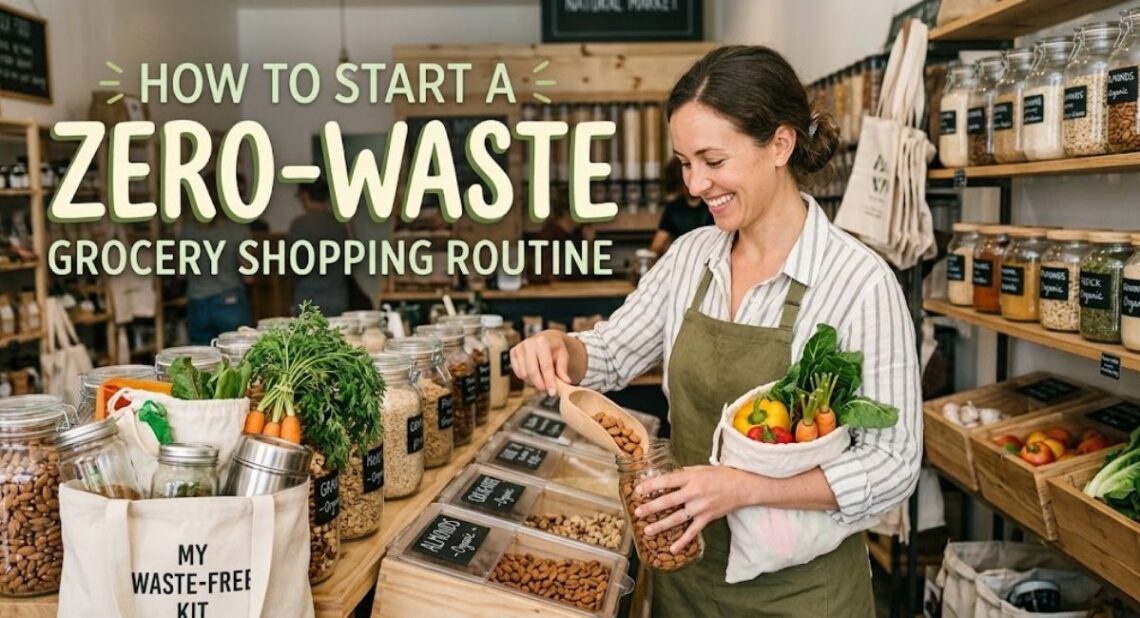
Cloth produce bags replace the thin plastic bags typically found near the fruit and vegetable section. Most are lightweight, machine washable, and see through enough that staff can weigh items without needing to remove them. Glass jars or lightweight containers work well for bulk bin items like grains, pasta, nuts, and spices, particularly if your store allows customers to bring their own containers, which is worth confirming with staff before your first bulk shop. A set of reusable produce bags, a couple of mesh bags for bread or bulk items, and two or three medium glass jars is usually enough to start, without needing to buy an entire specialty kit.
Weigh your empty containers at home and note the weight, sometimes called the tare weight, either on a small sticker or in your phone. Many stores with bulk bins have a scale near the entrance specifically for this purpose, so staff can subtract the container weight at checkout.
How Bulk Bin Shopping Actually Works
Bulk bins can feel intimidating the first time, but the process is straightforward once you understand the basic steps. Most stores with bulk sections have dispensers or bins for items like rice, oats, pasta, dried beans, nuts, seeds, flour, and sometimes liquids such as oils, honey, or cleaning products.
Bring your own clean, dry container or a reusable bag. Weigh it empty first if your store requires a tare weight, then fill it directly from the bin using the provided scoop or dispenser lever. Label the container with the bin number or item name if the store uses a numbering system, since bulk bins do not always come with individual labels once filled. At checkout, staff will weigh the full container and subtract the tare weight to calculate the cost of just the product.
Buying in bulk this way often works out cheaper per unit than pre-packaged equivalents, particularly for pantry staples like rice, oats, and dried legumes, since you are not paying for packaging or brand marketing built into the shelf price. It also allows you to buy exactly the amount you need for a recipe rather than being locked into a fixed package size, which can reduce food waste alongside packaging waste.
Building a Zero Waste Grocery Shopping List
A realistic package free shopping list is organized around where in the store you are most likely to find low packaging options, rather than trying to source everything zero waste at once.
Produce. Loose fruits and vegetables, bought without a bag or in a reusable cloth bag, form the easiest starting point for most shoppers, since fresh produce is rarely mandatory to buy pre-packaged.
Bulk pantry staples. Rice, oats, pasta, flour, dried beans, lentils, nuts, and seeds are commonly available in bulk bins and translate easily into a reusable container system.
Bakery items. Bread from an in-store bakery can often be placed directly into a reusable cloth or mesh bag rather than taking the pre-packaged plastic wrapped loaf from the shelf.
Bulk liquids. Some stores offer bulk dispensers for cooking oil, vinegar, honey, and liquid soap, which work the same way as dry bulk bins using your own bottle.
Package free proteins. Deli and butcher counters will often place items directly into a container you bring, rather than the pre-packaged version, if you ask in advance.
A short table can help visualize how a typical shop maps onto lower waste alternatives.
| Category | Typical Packaged Option | Lower Waste Alternative |
| Fruits and vegetables | Plastic wrapped trays | Loose produce in cloth bags |
| Grains and pasta | Boxed or bagged | Bulk bin with reusable container |
| Bread | Plastic wrapped loaf | Bakery counter with cloth bag |
| Meat and cheese | Pre-packaged trays | Deli counter with your own container |
| Snacks and nuts | Individually wrapped bags | Bulk bin nuts and dried fruit |
Farmers Markets as a Zero Waste Shopping Strategy
Farmers markets are often one of the most reliable places to shop with minimal packaging, since produce is frequently sold loose or in reusable crates that vendors take back. Buying directly from local growers also tends to shorten the supply chain, which can reduce the layers of packaging added purely for transport and shelf stability in a traditional grocery store.
Beyond packaging, farmers markets often support seasonal eating, since what is available tends to reflect what is currently in harvest locally. This naturally shifts shopping habits toward produce that has not traveled as far, which carries its own environmental benefits beyond packaging reduction. Bringing your own bags and a few small containers for items like honey, eggs, or baked goods makes a farmers market trip nearly as low waste as a well planned bulk store visit.
What to Do When Zero Waste Options Are Limited
Not every grocery store offers bulk bins or a butcher counter willing to use your own containers, and rural areas in particular may have far fewer package free options nearby. In these situations, a realistic zero waste approach focuses on reducing packaging rather than eliminating it entirely.
Choosing the larger package size instead of multiple smaller ones reduces the packaging to product ratio. Prioritizing recyclable materials like glass, metal, and paper over multi-layer plastic where a package free option is not available still makes a meaningful difference. Buying frozen vegetables in a single large bag rather than repeated small trips for fresh produce that spoils before use can reduce both packaging and food waste simultaneously. None of these approaches are as ideal as a fully package free bulk shop, but they represent genuine progress within real constraints, and progress compounds over time far better than an all or nothing approach that becomes unsustainable after a few weeks.
Storing What You Bring Home
Zero waste grocery shopping pairs naturally with how you store food once it is home. Bulk pantry staples like grains and legumes keep best in airtight glass or metal containers, which also make it easy to see when you are running low. Produce bought loose benefits from proper storage methods specific to each type, since some vegetables last longer refrigerated while others do better at room temperature.
For a deeper look at storage methods that extend the life of package free groceries and reduce food waste, our guide on plastic free food storage covers container types and storage techniques in more detail.
Common Mistakes When Starting Out
A frequent mistake is trying to eliminate all packaging from the very first shopping trip. This usually leads to frustration, since most grocery stores are not designed around package free shopping, and a handful of items simply will not be available without packaging no matter how prepared you are. Treating the first few trips as a learning process, rather than expecting a perfect zero waste haul immediately, makes the habit far more likely to stick.
Another common issue is buying reusable containers and bags that do not match actual shopping habits. Someone who rarely cooks with dried legumes does not need five jars sized for bulk beans, while someone who bakes often may want a larger flour specific container. Paying attention to what you actually buy each week over the first month, before investing heavily in a full matching container system, avoids wasted money on tools that end up unused.
Forgetting bags and containers is the most common practical barrier, and it happens to almost everyone at some point. Keeping a small emergency kit in the car, including a couple of foldable cloth bags, means a forgotten kitchen bag does not derail an entire shopping trip.
Zero Waste Shopping for Meal Planning and Lunches
Zero waste grocery habits extend naturally into how food gets used once it is home, particularly around meal prep and lunches. Buying bulk grains, legumes, and produce sets up a kitchen well for batch cooking, which itself reduces both food waste and the need for individually packaged convenience foods during a busy week.
Packing lunches using reusable containers filled from bulk bought staples avoids the plastic wrapped, individually portioned snack items that dominate the packaged food aisle. This connects directly with strategies covered in our guide to eco friendly lunch ideas, which focuses on practical swaps for school and work lunches that build on the same bulk shopping habits described here.
Bringing the Whole Household Along
Zero waste grocery shopping tends to work better as a household habit rather than one person’s solo project, particularly if you are shopping for a family. Involving children in choosing produce or filling bulk containers can make the process feel less like a chore and more like a normal part of the shopping routine, which helps the habit stick across generations rather than just for the person doing the primary shopping.
For households just beginning to reduce plastic more broadly, grocery shopping is often one of the more approachable starting points precisely because it happens on a predictable weekly schedule, making it easier to build consistent habits around compared to less frequent purchases. Our broader guide to plastic free living for beginners covers how grocery habits fit into a wider household approach to reducing plastic.
Budgeting for a Zero Waste Grocery Routine
A common misconception is that zero waste grocery shopping is automatically more expensive. In practice, bulk buying often reduces per unit cost for pantry staples, and buying only the quantity needed for a specific recipe reduces food waste, which itself carries a real financial cost most households underestimate.
The upfront cost of reusable bags and containers is the main initial investment, but these items typically last for years with basic care, meaning the cost is spread thin over time. Starting with a small kit rather than buying an extensive matching set of jars and bags all at once keeps the initial investment manageable while you figure out which tools actually fit your shopping habits.
Building the Habit Long Term
The shoppers who stick with a zero waste grocery routine long term tend to build it gradually rather than switching everything at once. Starting with produce and one or two bulk staples in the first month, then adding bakery items or a reusable bottle for bulk liquids in the following months, makes the change feel manageable rather than overwhelming.
Keeping your reusable bags and containers somewhere visible, such as by the front door or in the car, removes the most common barrier to consistency, which is simply forgetting them. This same principle of designing your environment to support the habit rather than relying on memory alone applies broadly across sustainable living changes, something we explore further in our piece on why sustainable living is easier than you think.
Hygiene and Food Safety Considerations
Some shoppers worry that bulk bins are less hygienic than sealed packaging, and it is worth addressing this directly. Reputable stores clean and refill bulk bins on a regular schedule, and the scoops or dispensers are designed to minimize hand contact with the product itself. Using your own clean, dry containers, washed with hot soapy water and fully dried before each shopping trip, is the main hygiene factor within your control, since any residual moisture in a container can affect dry goods like flour or rice once filled.
It is worth avoiding bulk bins for items you plan to store for a very long time without checking on them, since bulk products sometimes have less standardized information about origin batch or exact packing date compared to sealed retail packaging. For most households buying and using pantry staples within a few months, this is a minor consideration rather than a genuine safety concern.
Reading Store Layouts to Shop More Efficiently
Once you understand which sections of a store typically offer lower packaging options, a zero waste shopping trip becomes noticeably faster. Produce, bulk bins, and bakery counters tend to cluster near the edges or a dedicated section of larger grocery stores, while the center aisles are generally where the most heavily packaged, processed items live. Planning a rough route through the store before you shop, starting with produce and bulk sections and treating the center aisles as a last resort, naturally reduces the packaged items that end up in your cart simply because you spend less time exposed to them.
Some grocery chains have also started clearly labeling package free or low waste sections, partly in response to growing customer demand. Checking your local store’s website or asking staff directly about bulk offerings before your first trip can save time compared to discovering the layout through trial and error in person.
FAQs for How to Start a Zero Waste Grocery Shopping Routine
Do I need special containers for bulk bin shopping?
No special containers are required. Clean glass jars, lightweight reusable bags, or containers you already own at home work fine, as long as they are clean and dry before filling.
Is zero waste grocery shopping more expensive than regular shopping?
Not typically. Bulk staples are often cheaper per unit than pre-packaged equivalents, and buying only what you need reduces food waste, which offsets much of the small upfront cost of reusable bags and containers.
What if my local grocery store does not have bulk bins?
Focus on loose produce, larger package sizes to reduce packaging ratio, and recyclable materials like glass and paper where package free options are not available. Farmers markets can also fill some of the gap.
How do I weigh my own containers at the store?
Most stores with bulk bins have a scale for this purpose. Weigh your empty container before filling it, note the weight, and staff will subtract that amount at checkout.
Can I bring my own containers to the deli or butcher counter?
Many stores allow this if you ask in advance, though policies vary by location. It is worth calling ahead or asking staff directly, since not every counter is set up for it.
Final Thoughts
Zero waste grocery shopping is less about perfection and more about building a routine that steadily reduces the packaging entering your kitchen. Starting small, focusing on produce and a couple of bulk staples, and expanding gradually tends to produce habits that actually stick, rather than an ambitious plan that fizzles out after the first difficult shopping trip.
At Aqua Wellness Hub, we believe sustainable habits work best when they fit into real life rather than demanding perfection. For more ways to reduce waste in your kitchen and daily routine, see our guides on the best reusable kitchen products for a zero waste home and composting at home.
Helpful resources:
– U.S. Environmental Protection Agency, reducing food waste.