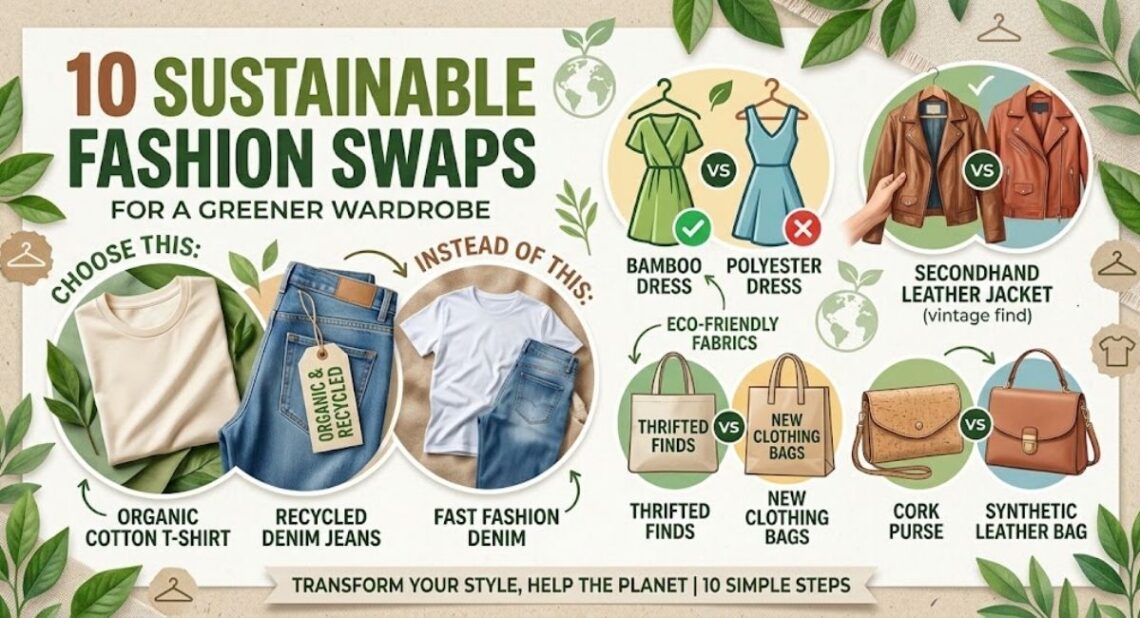
You open your closet and it is full, yet you still feel like you have nothing to wear. Somewhere between fast fashion trends moving faster than ever and the sense that clothes just do not last like they used to, most wardrobes have become both overstuffed and unsatisfying at the same time.
Sustainable fashion swaps are not about throwing everything out and starting over. They are about changing how you shop, care for, and think about clothing going forward, one decision at a time, so that your wardrobe becomes smaller, more versatile, and less wasteful without losing your personal style.
This guide walks through ten practical swaps that genuinely reduce the environmental footprint of your wardrobe, along with the reasoning behind each one so you can decide which changes fit your life right now.
Why Fashion Waste Is a Bigger Problem Than It Looks
The fashion industry produces an enormous volume of clothing each year, and a significant share of it is discarded within a relatively short time after purchase. Fast fashion, built around rapid production cycles and low prices, has trained many shoppers to treat clothing as disposable rather than durable, which drives both the volume of waste and the resources consumed in producing garments that are worn only a handful of times.
Textile waste is also harder to deal with than many other categories of household waste, since most modern clothing blends natural and synthetic fibers, which makes recycling technically difficult and means much of it ends up in landfill or incineration. Beyond the waste itself, the production of clothing, particularly conventional cotton and synthetic fibers, involves significant water use, chemical inputs, and carbon emissions across the supply chain.
None of this means fashion has to be abandoned or that every purchase needs to be perfect. It means the small, repeatable swaps below can meaningfully shift the footprint of a wardrobe over time, in the same way that other everyday sustainable habits add up, something we explore more broadly in our piece on simple eco friendly habits to start today.
Swap 1: Fast Fashion Hauls for Thrifted Finds
Thrifting and secondhand shopping extend the useful life of clothing that already exists, which avoids the resource cost of producing something entirely new. Secondhand shopping has also grown well beyond dusty charity shop racks, with online resale platforms making it far easier to find specific brands, sizes, and styles without the trial and error of in-person thrifting.
Starting with a few wardrobe basics, such as denim, blazers, or plain t-shirts, tends to be the easiest entry point for secondhand shopping, since these items are less trend dependent and more widely available in good condition.
Swap 2: Trend Chasing for a Capsule Wardrobe Mindset
Building a wardrobe around a smaller set of versatile, well made pieces that mix and match easily reduces both clutter and the temptation to buy trend driven items that fall out of favor within a season. This approach, often called a capsule wardrobe, prioritizes cost per wear over upfront price, since a higher quality item worn frequently over years often works out cheaper and more sustainable than several cheap items replaced repeatedly.
We cover exactly what this approach involves and how to start building one in our companion guide, what is a capsule wardrobe and how it reduces waste, which pairs well with the swaps in this article.
Swap 3: Synthetic Fabrics for Organic Cotton and Natural Fibers
Synthetic fabrics like polyester and nylon are derived from fossil fuels and shed microplastic fibers during washing, which eventually make their way into waterways. Natural fibers such as organic cotton, linen, and wool break down more readily at the end of their life and avoid this microplastic shedding issue entirely.
Organic cotton specifically avoids the synthetic pesticides and fertilizers used in conventional cotton farming, which reduces the chemical footprint of production, though it is worth noting organic certification does not automatically address water use, which remains a consideration for cotton generally regardless of farming method.
Swap 4: Single Use Trend Pieces for Quality Basics
Trend pieces bought for a single season or a specific event often see very limited wear before being discarded or forgotten in a closet. Redirecting that spending toward higher quality basics, such as a well constructed coat, a durable pair of jeans, or shoes built to be resoled rather than replaced, shifts spending toward items that genuinely earn their place in a wardrobe over years rather than weeks.
Swap 5: Unknown Supply Chains for Transparent Brands
A growing number of clothing brands now publish information about where and how their garments are made, including factory conditions and material sourcing. Choosing brands that are transparent about their supply chain, even if it means paying slightly more, supports a broader shift in the industry toward accountability, and it gives shoppers a clearer picture of what they are actually buying beyond the price tag on the label.
Swap 6: Frequent Washing for Proper Garment Care
Overwashing clothing wears down fibers faster than necessary and uses more water and energy than required for most garments. Many items, particularly jeans, wool sweaters, and outerwear, do not need washing after every single wear and last significantly longer when washed less frequently and air dried rather than machine dried on high heat.
Learning proper care for different fabric types, including cold water washing and air drying where appropriate, is one of the simplest ways to extend the life of clothing you already own, which is arguably the most sustainable swap of all since it requires no new purchase at all.
Swap 7: Disposal for Repair and Alteration
A missing button, a small tear, or a hem that no longer fits often leads to an item being discarded entirely, when a simple repair could extend its usable life significantly. Learning basic mending skills, or building a relationship with a local tailor or cobbler, keeps garments and shoes in rotation rather than in landfill.
Alteration also solves the common problem of clothing that almost fits but not quite, which is a frequent reason perfectly good garments end up unworn in the back of a closet.
Swap 8: Landfill for Textile Recycling and Donation
When an item genuinely reaches the end of its usable life, sending it to landfill is rarely the only option. Many clothing retailers now run take back programs, and textile recycling facilities can process worn out garments into insulation material, industrial rags, or new fiber blends, even when the item is too damaged to donate.
Donation remains a strong option for items still in wearable condition, though it is worth being realistic that not every donated item finds a new home, particularly heavily worn basics, which is part of why reducing the volume purchased in the first place matters as much as what happens at disposal.
Swap 9: Impulse Buys for a Considered Purchase Habit
A simple but effective swap is building in a short waiting period, even just 24 to 48 hours, before completing a non essential clothing purchase. This interrupts the impulse buying pattern that fast fashion marketing is specifically designed to trigger, and it noticeably reduces the number of items bought that end up rarely worn.
Asking a few honest questions before buying, such as whether the item pairs with at least three things already owned, whether it suits the current season, and whether it fills an actual gap rather than simply looking appealing in the moment, filters out a meaningful share of purchases that would otherwise go largely unworn.
Swap 10: Ignoring Fiber Content for Reading Labels
Learning to read clothing labels for fiber content and care instructions turns shopping into a more informed decision. Blended fabrics, while sometimes practical for stretch or durability, are generally harder to recycle than single fiber garments, and knowing this can shift preference toward simpler fiber compositions when other factors are equal.
Care labels also indicate how demanding an item will be to maintain, which matters for the previous swap around reducing overwashing. An item requiring dry cleaning, for example, carries a different maintenance footprint than one that can be machine washed cold.
A Quick Comparison: Fast Fashion vs Slow Fashion Habits
| Factor | Fast Fashion Approach | Slow Fashion Approach |
| Purchase frequency | Frequent, trend driven | Infrequent, considered |
| Garment lifespan | Often under a year of regular wear | Multiple years with care |
| Fiber content | Often synthetic blends | Often natural or higher quality blends |
| End of life | Frequently discarded | Repaired, resold, or recycled |
| Cost per wear | Can be higher despite low upfront price | Often lower over time |
How These Swaps Connect to a Broader Sustainable Lifestyle
Sustainable fashion swaps rarely exist in isolation. Many people who start paying closer attention to what they buy for their wardrobe find the same mindset naturally extends into other areas of household spending and consumption. This mirrors a pattern we see across sustainable living generally, where a handful of easy swaps tend to build confidence and momentum toward bigger changes over time, a theme covered in more depth in our article on why sustainable living is easier than you think.
It is also worth acknowledging that sustainable fashion is sometimes misunderstood as requiring an entirely new, expensive wardrobe from ethical brands. In reality, the single most sustainable swap available to almost anyone is simply wearing what you already own for longer, which costs nothing and avoids several of the myths that circulate around what sustainable fashion actually requires, a topic we unpack further in myths about green living debunked.
Spotting Greenwashing in Fashion Marketing
As sustainable fashion has grown in popularity, so has the marketing language surrounding it, and not all of it reflects genuine change. Terms like eco-friendly, conscious, or green printed on a hangtag do not carry a standardized legal meaning in most markets, which means they can be applied to a garment with only minor sustainability improvements over a standard product.
A few practical checks help separate genuine sustainability efforts from marketing. Look for specific, verifiable claims rather than vague language, such as a stated percentage of recycled or organic material rather than a general eco-friendly label. Check whether the brand publishes information about factory locations and labor practices, since transparency tends to correlate with genuine accountability. Be skeptical of brands producing extremely frequent new collections while also marketing themselves as sustainable, since rapid production cycles are fundamentally at odds with the slower, considered purchasing that sustainable fashion is meant to encourage.
Third party certifications, such as Global Organic Textile Standard for organic fibers or Fair Trade certification for labor practices, offer a more reliable signal than brand self description alone, though even certifications vary in rigor and it is worth understanding what a specific certification actually covers before treating it as a full guarantee.
Building a Capsule Wardrobe Around These Swaps
Several of the swaps covered above become significantly easier once you have a smaller, well curated wardrobe to work from, which is where capsule wardrobe principles fit naturally into a broader sustainable fashion strategy. Rather than treating capsule wardrobes and sustainable swaps as separate projects, it helps to think of the capsule approach as the structural framework that the individual swaps slot into.
Start by taking stock of what you already own and identifying genuine gaps, rather than assuming you need to buy a complete new set of basics. From there, apply the thrifting and quality basics swaps specifically to fill those identified gaps, rather than shopping broadly and hoping useful pieces turn up. This targeted approach tends to produce a wardrobe where every item earns regular wear, which is both the financial and environmental goal of the capsule wardrobe concept covered in detail in our companion guide.
Seasonal Wardrobe Transitions Without Waste
Seasonal changes are a common trigger for unnecessary clothing purchases, as shoppers feel pressure to refresh their wardrobe for a new season even when existing pieces would work with minor additions. A more sustainable approach to seasonal transitions focuses on layering pieces that bridge between seasons, such as a midweight jacket that works in both spring and autumn, rather than maintaining entirely separate wardrobes for each season.
Proper storage during off seasons also extends garment life. Clean clothing before storing it away, since stains and body oils left untreated over a season can become permanent and attract pests in stored fabric. Breathable garment bags protect against dust and moisture better than sealed plastic, which can trap humidity and encourage mildew in stored natural fiber clothing.
Building Your Own Swap Priority List
Not every swap needs to happen at once, and trying to adopt all ten simultaneously often backfires the same way any overly ambitious lifestyle change does. A more realistic approach is to pick one or two swaps that address your current biggest pain point, whether that is an overflowing closet, a habit of impulse buying, or clothing that wears out faster than expected, and build from there.
For many people, starting with garment care and a considered purchase habit produces the fastest visible results, since both require no new spending and immediately slow the rate at which items wear out or accumulate unnecessarily.
The Environmental Cost of a Single Garment
It can help to understand roughly what goes into producing a single piece of clothing before it ever reaches a store shelf. A cotton t-shirt, for example, requires significant water for irrigation during growing, along with processing steps like dyeing and finishing that involve additional water and chemical inputs. Synthetic garments avoid the agricultural water use but rely on petroleum based raw materials and energy intensive manufacturing processes instead.
Transport adds a further layer, since a large share of clothing sold in the UK and US is manufactured overseas and shipped across long distances before reaching a store or a customer’s door. None of this is meant to suggest that buying any new clothing is inherently wrong, but understanding the resource cost behind a single garment helps explain why swaps like thrifting, garment care, and considered purchasing carry real environmental weight, since each of these strategies effectively gets more use out of resources that have already been spent.
FAQs for Fashion Swaps for a Greener Wardrobe
Is sustainable fashion always more expensive?
Not necessarily. While some sustainable brands carry a premium, thrifting, garment care, and reducing impulse purchases are all free or low cost swaps that meaningfully reduce a wardrobe’s footprint.
How can I tell if a fabric is more sustainable?
Natural fibers like organic cotton, linen, and wool generally biodegrade more readily and avoid microplastic shedding compared to synthetic fibers like polyester. Checking the care label for fiber content is a quick way to start evaluating this.
What should I do with clothes I no longer wear?
Donation, resale, and textile recycling programs are all better options than landfill disposal for items that have reached the end of their use in your own wardrobe, depending on the item’s condition.
Do I need to throw away my synthetic clothing to be sustainable?
No. Discarding still wearable clothing creates its own waste. The more sustainable approach is generally to wear existing items until they are worn out, then choose more sustainable fibers for future purchases.
How do I start building a more sustainable wardrobe without a big budget?
Begin with garment care, thrifting for new needs, and a considered purchase habit before buying anything. These changes cost little to nothing and often have the biggest immediate impact.
Final Thoughts
A greener wardrobe does not require replacing everything you own with ethically produced alternatives overnight. It comes from a series of smaller, repeatable choices, thrifting instead of buying new, caring for garments properly, repairing rather than discarding, and being more considered about what enters your closet in the first place.
At Aqua Wellness Hub, we believe sustainable living works best as a series of manageable swaps rather than an all or nothing overhaul. To continue building a lower waste lifestyle beyond your wardrobe, see our guides on simple ways to live greener every day and top eco apps that help you live smarter.
Helpful resources:
– Ellen MacArthur Foundation, fashion and the circular economy
– Fashion Revolution, transparency in the fashion industry