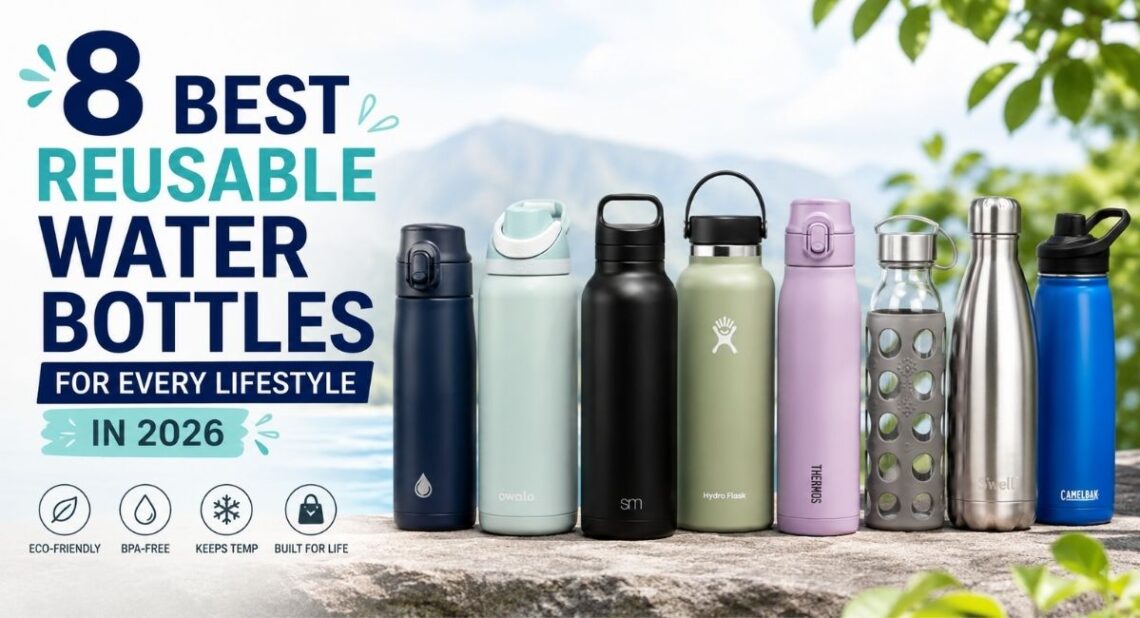
You reach for your water bottle every single day, yet most people are still carrying one that leaks in their bag, sweats all over their desk, or gets left behind at the gym because it is too bulky to bother with. If that sounds familiar, the problem usually is not you. It is the bottle.
A good water bottle should disappear into your routine, not fight against it. It should keep drinks cold on a hot commute, survive a drop on a tile floor, and be easy enough to clean that you actually do it. With so many stainless steel, insulated, and eco friendly reusable water bottles on the market right now, picking the right one has become surprisingly confusing.
This guide breaks down the best reusable water bottles for different lifestyles, from athletes and office workers to parents and outdoor adventurers, so you can stop guessing and start hydrating with something that actually fits how you live.
Why Your Choice of Water Bottle Actually Matters
Hydration habits are shaped by convenience far more than willpower. Research on daily fluid intake consistently shows that people drink more water when it is easy to access and pleasant to use. A bottle that is heavy, hard to open one handed, or prone to leaking becomes a bottle that stays in the cupboard.
There is also an environmental angle. Single use plastic bottles remain one of the most common items found in litter and waterways. Switching to a reusable option is one of the simplest sustainable living habits a household can adopt, and it pairs naturally with other simple eco friendly habits that reduce daily plastic use.
Beyond the environmental case, there is a practical wellness reason too. Staying properly hydrated affects concentration, mood, and energy throughout the day, something covered in more depth in our piece on hydration and mental clarity. A bottle you actually enjoy using becomes a quiet nudge toward drinking more water without needing to think about it.
What Makes a Reusable Water Bottle Genuinely Good
Before comparing specific bottles, it helps to know what separates a well designed one from a gimmick. Four factors matter most.
Material. Stainless steel is durable, does not retain flavors, and typically offers the best insulation. BPA-free plastic is lighter and cheaper but varies widely in quality. Glass is chemically neutral and tastes the cleanest, though it is heavier and less impact resistant.
Insulation. Double wall vacuum insulated bottles keep cold drinks cold for up to 24 hours and hot drinks hot for around 12, using the same principle as a thermos. Single wall bottles are lighter but offer no temperature control.
Lid style. Straw lids encourage more frequent sips, flip tops are fast for one handed use during exercise, and screw tops with a wide mouth are easiest to clean and fill with ice.
Cleanability. A bottle with a narrow neck or complex straw mechanism can trap bacteria if it is not cleaned properly. Wide mouth openings and dishwasher safe parts make daily maintenance realistic.
With those criteria in mind, here are eight standout reusable water bottles worth considering.
1. Best Overall: Stanley Quencher
Stanley’s Quencher line has become the bottle most associated with the current reusable water bottle trend, and the hype is backed by genuine function. The vacuum insulated stainless steel body keeps ice intact for hours, the handle makes it easy to carry from car to desk, and the FlowState lid allows for both straw sipping and a wider drinking opening.
It suits people who drink large volumes of water throughout the day and prefer sipping steadily over gulping. The main trade off is size and weight, since the largest versions can be bulky in a bag.
2. Best for Fitness: Hydro Flask Wide Mouth
Hydro Flask built its reputation on temperature retention, and the Wide Mouth model remains a strong choice for anyone who wants a straightforward, no frills insulated bottle. The stainless steel interior resists odor and flavor transfer, which matters if you rotate between plain water and electrolyte mixes.
This is a solid pick for gym goers and hikers who want something rugged that will survive being dropped on concrete or thrown in a car boot. It pairs well with the routines described in our guide to water based workouts for joint health, where consistent hydration during low impact training supports recovery.
3. Best Everyday Carry: Owala FreeSip
Owala’s FreeSip lid is genuinely clever. It combines a push button straw opening with a separate flip up spout, so you can switch between sipping and drinking without unscrewing anything. The bottle also has a flat bottom that stands securely on desks and car cup holders, which sounds minor until you have knocked over one too many bottles.
This is a good match for people juggling meetings, school runs, and errands who want speed over ceremony.
4. Best Budget Pick: BPA-Free Plastic Sports Bottle
Not everyone needs a premium insulated bottle, and a well made BPA-free plastic option can serve daily needs perfectly well. Look for bottles labeled Tritan or similar BPA-free copolyester, since these resist cracking and do not absorb odors as readily as cheaper plastics.
These bottles are lightweight, which makes them a practical option for children, casual gym use, or as a backup bottle kept in a bag or car.
5. Best for Minimalists: Glass Bottle with Silicone Sleeve
Glass bottles wrapped in a protective silicone sleeve give you the cleanest possible taste with some cushioning against drops. Because glass does not react with liquids, it is a favorite among people who are sensitive to any metallic or plastic aftertaste.
They work best for desk use or slower paced days rather than high impact activity, since glass remains more fragile than steel even with a sleeve.
6. Best for Travel: Collapsible Silicone Bottle
Collapsible bottles fold flat when empty, making them useful for travel, hiking daypacks, or anyone trying to reduce bulk. Food grade silicone versions are BPA-free and can handle both cold and, in some cases, hot liquids.
The trade off is durability over the long term, since the folding seams can wear out faster than a rigid bottle. Still, for occasional travel use this style solves a real space problem.
7. Best for Kids: Insulated Bottle with Straw Lid and Handle
Children’s bottles need to prioritize grip, spill resistance, and a straw that is easy to sip without tipping the whole bottle back. Smaller insulated stainless steel bottles with a carrying handle and a locking straw lid tend to perform best in school bags, since they resist leaking even when packed sideways.
Building this habit early connects to broader household routines around daily water intake, since children often model their hydration habits on what they see at home.
8. Best for Outdoor Adventures: Insulated Bottle with Carabiner Lid
For hiking, camping, or commuting by bike, a bottle with a carabiner style lid clip is genuinely useful. It frees up your hands and lets the bottle attach to a backpack strap rather than rattling around inside a bag. Look for a wide mouth opening so it can also double as an ice or snow scoop in a pinch, and a powder coated exterior for better grip when wet.
How Bottle Capacity Affects Daily Habits
Capacity is one of the most overlooked factors when choosing a reusable water bottle, and it changes how the bottle actually gets used. A 500ml bottle is easy to carry and quick to refill, which suits people who pass a water source often during the day, such as office workers near a kitchen or students moving between classes.
A larger 750ml to 1 litre bottle reduces how often you need to refill, which works well for long commutes, road trips, or work environments where a tap or filtered water source is not always nearby. The largest bottles, in the 1.2 litre to 2 litre range popularized by brands like Stanley, are designed around the idea of hitting a full day’s hydration target from a single fill, often with visible time markers printed on the side to pace intake.
There is a trade off worth considering before sizing up. Larger bottles are heavier once filled, harder to fit into smaller bags, and slower to clean. Someone who struggles to remember to drink water may benefit from a large bottle kept visibly on a desk, while someone who already drinks steadily throughout the day might prefer a smaller, lighter bottle that is easier to carry everywhere.
Common Mistakes People Make When Choosing a Bottle
A few recurring mistakes explain why so many reusable bottles end up abandoned in a cupboard within a few months.
The first is buying based on appearance alone. Color and aesthetic matter for motivation, but if the lid style does not match how you actually drink, such as buying a straw lid when you prefer tipping a bottle back, the bottle becomes annoying to use daily.
The second is ignoring weight when filled. A 1 litre stainless steel bottle can weigh close to a kilogram once full, which matters for anyone carrying it in a bag all day or attaching it to a stroller or bike.
The third is underestimating cleaning effort. Bottles with straws, flip valves, or multiple small parts require more frequent and careful cleaning than a simple screw top bottle. If daily cleaning is unlikely to happen, a simpler design will stay hygienic more reliably than a feature heavy one.
Finally, many people buy a bottle without considering where it needs to fit. A bottle that does not fit a car cup holder, a bike bottle cage, or a bag’s side pocket often ends up left behind rather than carried.
Sustainability Considerations Beyond the Bottle Itself
Choosing a reusable bottle is only part of reducing plastic waste tied to drinking water. Manufacturing processes, packaging, and end of life disposal all factor into a bottle’s overall environmental footprint. Stainless steel production has a higher upfront energy cost than plastic, but steel bottles typically last far longer and are more easily recycled at the end of their life, which offsets that initial impact over years of use.
Buying fewer, better made bottles rather than replacing cheap ones repeatedly tends to be the more sustainable path. Some brands also now offer take back or recycling programs for old bottles, which is worth checking before simply discarding a damaged one in general waste.
Pairing a reusable bottle with filtered tap water rather than bottled water compounds the benefit further, since it removes the ongoing plastic waste, transport emissions, and packaging associated with single use bottled water entirely.
Insulated vs Non Insulated: Which One Do You Actually Need
| Feature | Insulated (Double Wall) | Non Insulated (Single Wall) |
| Keeps drinks cold | Up to 24 hours | A few hours at most |
| Keeps drinks hot | Up to 12 hours | Minimal |
| Weight | Heavier | Lighter |
| Best for | Hot climates, gym, outdoor use | Desk use, kids, casual daily carry |
| Typical price range | Mid to premium | Budget friendly |
If you live somewhere with hot summers, work outdoors, or want your cold brew to stay cold through a commute, insulation earns its extra weight. If your bottle mostly sits on a desk near a water source, a lighter non insulated option may be all you need.
Understanding BPA-Free Labels
You will see the term BPA-free on nearly every plastic bottle sold today, but it is worth understanding what it actually means. Bisphenol A, or BPA, is an industrial chemical once commonly used in the manufacturing of certain plastics and resins. Health authorities have raised concerns about potential effects from BPA exposure over time, which led manufacturers to shift toward BPA-free alternatives such as Tritan copolyester.
A BPA-free label does not automatically mean a bottle is high quality. Cheaper BPA-free plastics can still absorb odors, stain from drinks like coffee or juice, and degrade faster with repeated dishwasher cycles. When comparing plastic bottles, look for both a BPA-free label and a reputable brand name, since manufacturing quality varies significantly even within the BPA-free category. Stainless steel and glass bottles avoid this consideration entirely, since they do not rely on plastic resins that require the same additive chemistry.
Choosing the Right Bottle for Your Lifestyle
The best reusable water bottle is the one that matches your actual day, not the one with the most features. A few quick scenarios can help narrow things down.
If you work at a desk most of the day, prioritize a wide, stable base and a lid style you will actually reuse without thinking about it. If you train regularly, insulation and a secure carrying method matter more than capacity. If you travel often, weight and packability should outrank temperature retention. If you are shopping for children, spill resistance and ease of cleaning come first.
It is also worth thinking about how a bottle fits into a wider plastic free living routine. Reusable bottles work well alongside other swaps covered in our guide to plastic free living tips, and pairing a good bottle with filtered tap water, discussed in our roundup of the best water filters and pitchers, removes much of the friction that leads people back to bottled water.
Caring for Your Reusable Water Bottle
A reusable bottle only stays hygienic if it is cleaned properly, and this is where many people fall short. Rinsing with water alone is not enough, especially for bottles with straws or narrow necks where bacteria and mineral buildup can accumulate.
A few habits keep bottles safe and long lasting. Wash with warm soapy water daily, using a bottle brush to reach the base and a narrower brush for straws. Let the bottle air dry fully with the lid off rather than sealing it while still damp. Once a week, a deeper clean with a diluted vinegar solution or a denture tablet dissolved in water helps clear mineral deposits and lingering odor, particularly if you regularly drink anything other than plain water.
Stainless steel bottles generally should not go in the dishwasher if they have a powder coated exterior, since high heat can damage the finish. Always check the manufacturer’s care instructions, since lids with silicone seals and straws are usually dishwasher safe even when the main body is not.
How to Test Whether a Bottle Will Actually Work for You
Reviews and specifications only go so far. A short in store or at home test can reveal problems before you commit to a bottle you will not use.
Fill it completely and carry it around for an afternoon to judge whether the weight is manageable in your bag or on a bike. Drink from it the way you actually drink, whether that means tipping it back quickly or sipping steadily through a straw, since a lid that looks convenient in photos can feel awkward in practice. Check whether it fits your car cup holder, desk drawer, or bag pocket, since a bottle that does not fit your existing spaces will not get carried consistently. Finally, take it apart and put it back together once, since a lid or straw mechanism that is fiddly to disassemble becomes a genuine barrier to regular cleaning.
FAQs
How often should I replace my reusable water bottle?
A well maintained stainless steel or glass bottle can last for years. Plastic bottles should generally be replaced every one to two years, or sooner if you notice scratches, cloudiness, or persistent odor, since damaged plastic can harbor bacteria more easily.
Are insulated water bottles worth the extra cost?
For most people who are active outdoors or live in warmer climates, yes. The ability to keep drinks cold for most of a day reduces the temptation to buy bottled drinks when you are out.
Is stainless steel better than plastic for reusable bottles?
Stainless steel typically wins on durability, insulation, and resistance to odor or flavor transfer. BPA-free plastic wins on weight and price. Neither is objectively better across every use case.
Can bacteria grow in a reusable water bottle?
Yes, if it is not cleaned regularly. Straws and narrow openings are the highest risk areas. Daily washing and a weekly deep clean significantly reduce this risk.
Do reusable water bottles actually help me drink more water?
Indirectly, yes. A bottle that is easy to carry, fill, and sip from removes the small barriers that often lead people to skip drinking water throughout the day.
Final Thoughts
Choosing a reusable water bottle is a small decision that pays off daily. The right one becomes part of your routine without you noticing it, quietly supporting both your hydration habits and a lower plastic footprint. Whether you land on a Stanley Quencher for all day sipping, a Hydro Flask for the gym, or a simple BPA-free bottle for everyday errands, the goal is the same: pick something you will genuinely reach for tomorrow morning.
At Aqua Wellness Hub, we believe small, practical swaps like this one add up to a healthier and more sustainable daily routine. For more ways to build these habits into your life, take a look at our guides on hydration myths and eco friendly habits and the best reusable kitchen products for a zero waste home.
Helpful resources: –