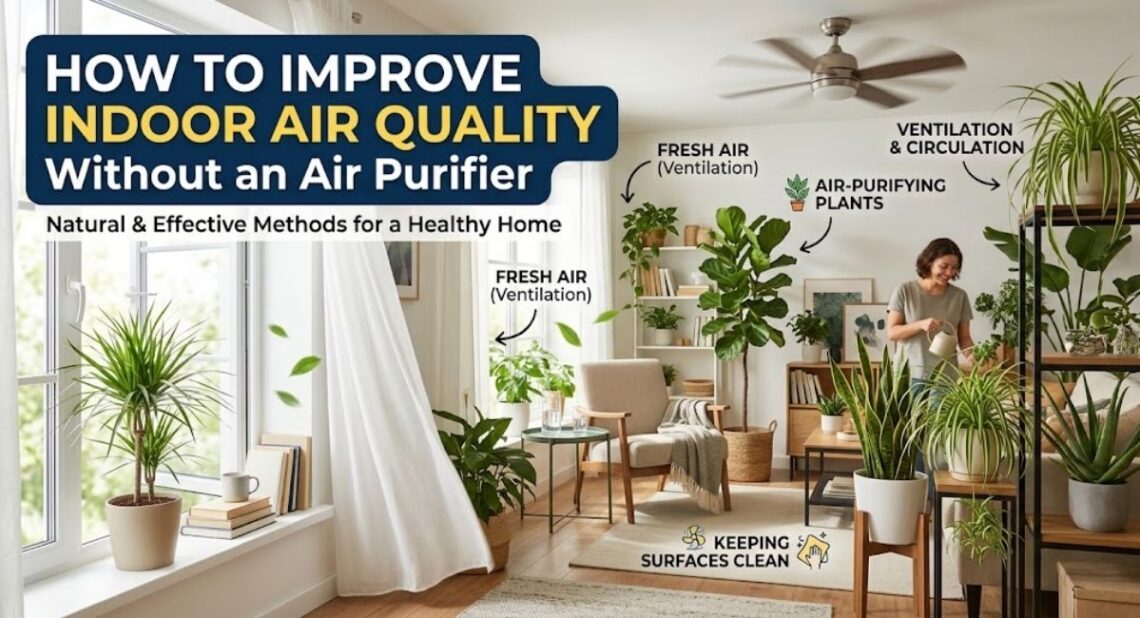
You close the windows, run a candle, and settle in for the evening, yet somehow the air inside still feels stale and heavy compared to stepping outside. Most people assume the fix for indoor air quality is a purchase, usually an air purifier, but the air inside a home is shaped by far more than filtration alone, and several of the most effective changes cost nothing at all.
Indoor air quality affects far more than comfort. Poor ventilation, hidden pollutant sources, and excess humidity can all contribute to symptoms like headaches, fatigue, and irritated eyes or throat that many people never connect back to the air in their own home. The encouraging part is that meaningful improvement does not require expensive equipment. Small, consistent habits around airflow, humidity, and what you bring into your home make a genuine difference.
This guide walks through practical, no-purchase-needed strategies to improve the air quality inside your home naturally, along with an honest look at when a purifier might still be worth considering.
Why Indoor Air Quality Often Gets Overlooked
Outdoor air pollution tends to get far more attention, yet indoor air can contain a surprising concentration of pollutants, sometimes at higher levels than the air just outside your front door. This happens because modern homes are built to be more airtight for energy efficiency, which keeps conditioned air inside more effectively but also traps pollutants that would otherwise dissipate outdoors.
Common indoor pollutants include volatile organic compounds, often shortened to VOCs, released from products like paint, furniture, cleaning supplies, and air fresheners. Combustion byproducts from gas stoves and fireplaces, dust and pet dander, and excess moisture that encourages mold growth all contribute as well. Understanding where these pollutants come from is the first step toward reducing them, since many of the most effective interventions target a specific source rather than trying to filter the air after the fact.
Ventilation: The Single Most Effective Free Change
Of everything covered in this guide, improving ventilation tends to produce the most noticeable and immediate impact on indoor air quality, and it costs nothing beyond a few minutes of daily habit change.
Open windows strategically. Even five to ten minutes of cross ventilation, opening windows on opposite sides of a room or home, can significantly refresh indoor air by diluting accumulated pollutants and moisture. Morning and evening, when outdoor pollen and traffic pollution tend to be lower in most areas, are often the most favorable times to do this, though this varies by location and season.
Use exhaust fans consistently. Bathroom fans during and after showers, and kitchen extractor fans during cooking, remove moisture and combustion byproducts directly at the source before they spread through the rest of the home. Many people underuse these fans or forget to run them long enough after the activity that generated the pollutant has finished, when a few extra minutes of runtime meaningfully improves clearance.
Avoid over-sealing a home. While energy efficiency matters, homes that are extremely airtight without a dedicated mechanical ventilation system can trap pollutants at higher concentrations than a home with some natural air exchange. If you have recently sealed a home extensively for energy savings, being more deliberate about manual ventilation habits becomes more important, not less.
Houseplants and Indoor Air: What They Actually Do
Houseplants are frequently cited as a natural air quality solution, and while the picture is more nuanced than some popular claims suggest, they do offer genuine benefits as part of a broader approach rather than a standalone fix.
The often cited NASA Clean Air Study from the late 1980s tested plant ability to remove specific VOCs in a sealed laboratory chamber, and while it demonstrated real pollutant uptake at the plant level, later analysis has noted that replicating a meaningful effect in a typical home would require a much larger number of plants than most spaces could realistically accommodate. This does not mean plants offer no benefit, but it does mean they work best as one component of a layered approach rather than a substitute for ventilation and source control.
Beyond VOC absorption, houseplants contribute to a room’s humidity balance through natural transpiration and have been associated in some studies with modest improvements in perceived air freshness and general wellbeing, even independent of measurable pollutant reduction. Species commonly recommended for indoor air benefit include spider plants, snake plants, and pothos, all of which are relatively low maintenance and tolerate a range of light conditions. Our detailed guide on the best indoor plants for clean air and style covers specific species and care requirements in more depth.
Reducing VOCs at the Source
Rather than relying solely on ventilation to clear VOCs after they enter the air, reducing what releases them in the first place addresses the problem more directly.
Choose low or zero VOC paints when redecorating, since standard paint can off-gas for weeks or longer after application. Store paints, solvents, and strong cleaning chemicals in a garage or ventilated space rather than inside living areas, since sealed containers can still release small amounts of vapor over time. Allow new furniture, particularly items made with pressed wood or certain adhesives, to off-gas in a well ventilated space or garage for a period before bringing them into a bedroom or living area, if practical.
Switching to natural, fragrance free cleaning products reduces another common VOC source in most homes. Many conventional cleaning products and air fresheners release VOCs specifically as part of their scent profile, meaning the products marketed to make a home smell fresh can paradoxically be contributing to indoor air pollutants. Our guide on the best eco friendly cleaning products covers effective natural alternatives in more detail.
Humidity Control Without Special Equipment
Humidity plays a significant role in indoor air quality, since both excessively dry and excessively humid air create different problems. Overly dry air can irritate airways and sinuses, while excess humidity encourages dust mites and mold growth, both of which are common indoor allergen sources.
Most homes function best somewhere in the range of 30 to 50 percent relative humidity, though this can vary based on climate and season. Without a dedicated humidifier or dehumidifier, a few habits help manage humidity naturally. Running exhaust fans during and after showers and cooking removes excess moisture before it spreads through the home. Avoiding drying laundry indoors on a rack in a poorly ventilated room prevents a significant, often underestimated source of indoor humidity. Fixing small leaks promptly, whether from a dripping tap or a slow pipe leak, prevents the kind of chronic dampness that supports mold growth in walls, cupboards, or under flooring.
Reducing Dust and Allergen Sources
Dust in a home is not simply dirt. It is a mixture of skin cells, fabric fibers, pet dander, pollen brought in from outside, and in older homes potentially other particles depending on building materials and age. Reducing dust accumulation improves both air quality and the burden on anyone in the household with allergies or asthma.
Vacuuming regularly with a machine that has a well sealed filter, rather than one that redistributes fine particles back into the air, makes a meaningful difference over time. Washing bedding weekly in hot water addresses one of the highest concentration areas for dust mites in most homes. Using a doormat and encouraging a shoes-off policy at the entrance reduces the amount of outdoor dust, pollen, and pollutants tracked directly into living spaces. Damp dusting surfaces, rather than dry dusting which can simply redistribute particles into the air temporarily before they resettle, captures dust more effectively.
A Simple Weekly Air Quality Routine
| Task | Frequency | Purpose |
|---|---|---|
| Open windows for cross ventilation | Daily, 5 to 10 minutes | Dilutes accumulated pollutants and moisture |
| Run bathroom and kitchen exhaust fans | During and after use | Removes moisture and combustion byproducts at the source |
| Vacuum with a sealed filter | 1 to 2 times weekly | Reduces dust, pet dander, and allergens |
| Wash bedding in hot water | Weekly | Reduces dust mite concentration |
| Check for damp or mold in bathrooms and windowsills | Weekly | Catches early moisture issues before mold establishes |
Cooking and Combustion Sources
Gas stoves in particular release combustion byproducts, including nitrogen dioxide, directly into indoor air during use, and this is one of the more significant and consistent indoor air quality concerns in many kitchens. Running the extractor fan every time the stove is used, not just during particularly smoky cooking, and ensuring the fan actually vents outside rather than simply recirculating air, meaningfully reduces this exposure.
Candles and incense, while often used to make a home feel more pleasant, also contribute particulate matter and, in the case of scented varieties, additional VOCs to indoor air. Using them occasionally rather than continuously, and in a well ventilated room, reduces this impact without requiring you to give them up entirely. Our guide to the best non-toxic candles covers lower impact options if candles remain part of your routine.
Bringing It Together as a Sustainable Home Habit
Improving indoor air quality naturally overlaps significantly with broader sustainable living habits already covered on this site, since many of the same choices, natural cleaning products, better ventilation habits, and reduced reliance on synthetic fragrance, serve both goals simultaneously. This connects closely with our guide on DIY natural air fresheners, which offers scent options that avoid the VOC concerns associated with many commercial air freshener products.
A calmer, better ventilated home also tends to support broader wellbeing goals beyond air quality alone, a connection explored further in our piece on tips to create a calming space at home.
When an Air Purifier Might Still Be Worth Considering
This guide focuses specifically on no-purchase strategies, and for many homes, consistent ventilation, source reduction, and humidity control address the majority of indoor air quality concerns without any additional equipment. That said, it is worth being honest that certain situations benefit from an air purifier as a genuine addition rather than a replacement for these habits, particularly homes near high traffic roads or industrial areas, households managing significant pet dander alongside allergy sensitivity, or homes in regions affected by seasonal wildfire smoke where outdoor air itself becomes a pollutant source that ventilation alone cannot solve.
Even in these situations, the natural strategies covered here remain relevant and complementary, since a purifier works most effectively alongside good ventilation habits and reduced pollutant sources, rather than as a stand-alone solution expected to compensate for a home with poor airflow and frequent VOC exposure.
Room by Room Air Quality Considerations
Different rooms in a home tend to develop different air quality challenges, and tailoring your approach room by room is often more effective than applying a single generic strategy everywhere.
Bedrooms benefit most from consistent ventilation and clean bedding, since this is where people spend the most continuous hours breathing the same air. Avoiding strongly scented products near the bed, including plug in air fresheners, tends to make the biggest difference here specifically.
Kitchens face the most consistent combustion and cooking related pollutant exposure of any room, making extractor fan use during every cooking session particularly important, alongside opening a window when weather allows.
Bathrooms deal primarily with humidity and mold risk rather than VOCs, so exhaust fan use during and for a period after showering, along with prompt attention to any visible mould in grout or around window frames, addresses the main concern.
Living rooms, particularly those with fireplaces or frequently used candles, benefit from the same combustion awareness as kitchens, alongside regular dusting given that these are often the highest traffic rooms in a home.
Home offices or studies, especially in homes with newer furniture or recent renovations, may carry a higher VOC load if pressed wood furniture or fresh paint has not fully off-gassed, making ventilation particularly worthwhile in these spaces during the first few months after new furnishings arrive.
Seasonal Adjustments to Your Air Quality Routine
Indoor air quality strategy shifts meaningfully with the seasons, and a routine that works well in summer may need adjustment in winter. During colder months, when windows stay closed more often for warmth, ventilation becomes both more important and less convenient, making short, deliberate bursts of cross ventilation, even just a few minutes, more valuable than leaving windows closed entirely for extended periods. Heating systems can also dry indoor air significantly during winter, making humidity awareness more relevant during this season specifically.
During pollen heavy spring months, those with seasonal allergies may need to balance ventilation benefits against pollen entering the home, potentially favoring early morning or post rain windows for airing out a space when pollen counts tend to be lower. Summer humidity, particularly in more humid climates, shifts the concern back toward moisture control and mold prevention rather than dryness.
Testing and Monitoring Air Quality at Home
Before assuming a strategy is working, it helps to have some sense of your starting point. You do not need professional equipment to get a useful picture. Affordable indoor air quality monitors, now widely available, can track particulate matter, humidity, and sometimes VOC levels over time, giving you feedback on whether your ventilation and source reduction habits are actually making a measurable difference rather than just a perceived one.
Even without a monitor, simple observation offers clues. Persistent condensation on windows during colder months points to excess humidity. A musty smell in a particular corner or cupboard often signals a hidden damp or mold issue worth investigating before it spreads further. Noticing whether headaches, stuffiness, or irritated eyes consistently ease when you step outside or open windows for a while is a practical, if informal, signal that indoor air quality may be part of the picture.
Keeping a simple log for a couple of weeks, noting symptoms alongside weather, ventilation habits, and any cleaning or cooking activity, can help identify patterns that are otherwise easy to miss day to day.
FAQs
How can I tell if my home has poor indoor air quality?
Common signs include a persistent stale smell, visible dust accumulation, condensation on windows, or unexplained headaches and irritation that improve when you spend time outside or in a different building.
Do houseplants really improve air quality on their own?
Plants offer some genuine benefit, particularly for humidity balance and general wellbeing, but achieving significant measurable pollutant reduction from plants alone would require far more plants than most homes can practically accommodate. They work best alongside ventilation and source reduction.
What is the ideal indoor humidity level?
Most homes function well between 30 and 50 percent relative humidity. Levels above this range can encourage mold and dust mites, while levels significantly below can irritate airways and sinuses.
Does opening windows help even in a polluted city?
Generally yes, particularly for short periods during lower traffic times, since indoor air often accumulates pollutants at a higher concentration than typical outdoor air, even in urban areas. Timing ventilation around lower outdoor pollution periods can help further.
Are scented candles and air fresheners bad for indoor air quality?
They can contribute VOCs and particulate matter, particularly with frequent or continuous use. Using them occasionally in a well ventilated space, or switching to natural fragrance alternatives, reduces this impact.
Final Thoughts
Improving indoor air quality does not require an expensive purifier as the first step. Consistent ventilation, reducing VOC sources, managing humidity, and controlling dust cover the majority of what affects the air inside a typical home, and every one of these habits costs nothing beyond a small daily effort.
At Aqua Wellness Hub, we believe a healthier home often comes down to small, consistent habits rather than a single purchase. To continue building a cleaner, more sustainable living space, explore our guides on simple ways to save water at home and why sustainable living is easier than you think.
Helpful resources:
– U.S. Environmental Protection Agency, indoor air quality guidance: – NHS, damp and mould in your home: