Living a greener life does not require a complete lifestyle overhaul. It is often the small, consistent choices that shape a more sustainable routine over time. Many people assume that eco-conscious living is expensive or complicated, but in reality, simple daily habits can make a meaningful difference for both the environment and your well-being.
This guide brings together practical, realistic, and easy habits you can start today. These ideas are designed to fit into everyday life without stress or perfectionism. Whether you are just getting started or refining your routine, these green lifestyle tips will help you build a more thoughtful and eco-aware daily rhythm.
Why Simple Eco Actions Matter More Than Big Changes
Large-scale environmental issues can feel overwhelming. However, the combined effect of individual actions creates real impact. Reducing waste, conserving water, and choosing sustainable food options all contribute to a healthier ecosystem.
Small changes also tend to last longer. When habits are simple and manageable, they become part of your daily routine instead of short-lived efforts. This is where easy habits come into play. They create consistency, and consistency leads to long-term results.
Adopting eco actions also improves your personal health. Eating fresher meals, reducing exposure to harmful chemicals, and spending more time outdoors all support physical and mental wellness.
Building a Greener Routine at Home
Your home is the easiest place to begin. Everyday choices around energy, water, and waste can significantly reduce your environmental footprint.
Here are practical steps you can take:
- Turn off lights and unplug devices when not in use
- Switch to energy-efficient bulbs
- Use natural cleaning products instead of chemical-heavy ones
- Wash clothes in cold water whenever possible
- Air-dry clothes instead of using a dryer
If you want a deeper guide on sustainable cleaning choices, you can explore this resource on eco-friendly cleaning solutions:
Best eco-friendly cleaning products
Another important area is water conservation. Many households use more water than necessary without realizing it. Simple adjustments can make a noticeable difference.
- Fix leaking faucets promptly
- Take shorter showers
- Turn off the tap while brushing your teeth
- Use water-saving fixtures
For more ideas, this guide offers practical tips:
Simple ways to save water at home
These small efforts help reduce utility bills while also supporting environmental balance.
Mindful Eating and Sustainable Food Choices
Food plays a major role in sustainable living. The way food is produced, packaged, and consumed has a direct impact on the environment.
One of the most effective shifts is focusing on fresh, minimally processed meals. Preparing food at home allows better control over ingredients and reduces packaging waste.
A great starting point is exploring Healthy Eco-Friendly Lunch Ideas. These meals focus on seasonal produce, plant-based ingredients, and low-waste preparation methods.
Simple ways to make your meals greener
- Choose locally grown produce when possible
- Reduce meat consumption and explore plant-based meals
- Store food in reusable containers instead of plastic
- Plan meals to avoid food waste
- Compost kitchen scraps
If you are interested in building a low-waste kitchen setup, this guide can help:
https://aquawellnesshub.com/simple-steps-to-create-zero-waste-kitchen/
Eating mindfully is not about strict rules. It is about making better choices more often and being aware of where your food comes from.
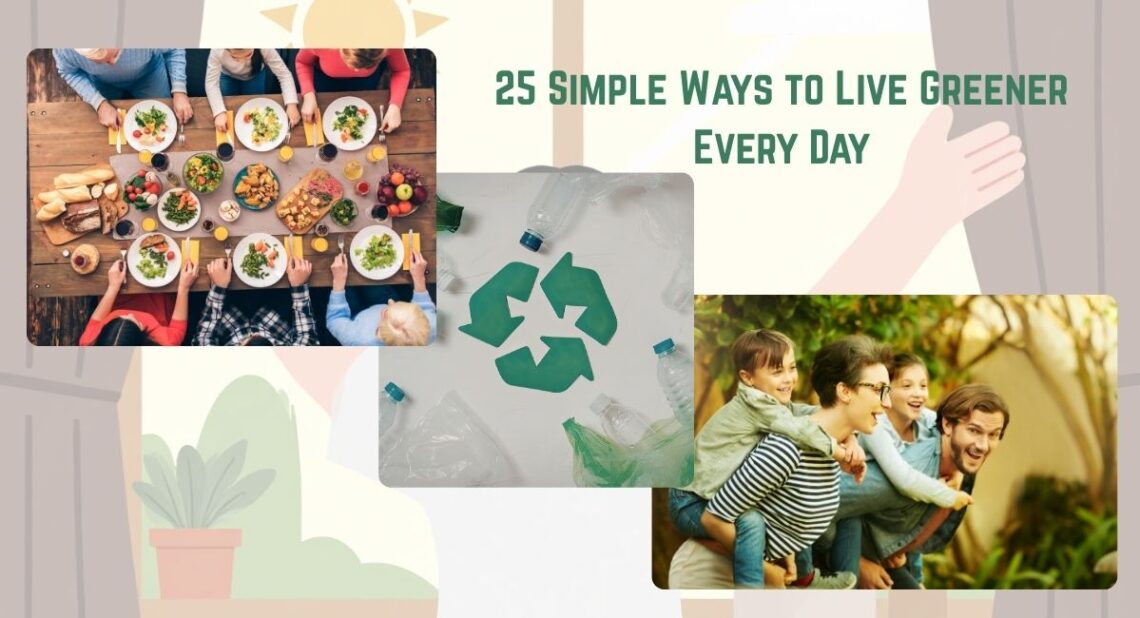
25 Simple Ways to Live Greener Every Day
Here are 25 practical and realistic eco actions you can incorporate into your daily routine.
Everyday Habits That Make a Difference
- Carry a reusable water bottle
- Use cloth bags instead of plastic bags
- Avoid single-use plastics whenever possible
- Choose products with minimal packaging
- Buy only what you need to reduce waste
Energy and Resource Conservation
- Turn off appliances when not in use
- Use natural light during the day
- Set your thermostat efficiently
- Use energy-saving devices
- Reduce water waste in daily routines
For more ways to improve energy use at home, check this helpful resource:
https://aquawellnesshub.com/top-energy-saving-devices-for-every-home/
Waste Reduction and Recycling
- Recycle correctly based on local guidelines
- Compost organic waste
- Repair items instead of replacing them
- Donate unused clothes and items
- Choose reusable alternatives over disposable ones
Conscious Shopping Choices
- Support sustainable and ethical brands
- Buy second-hand when possible
- Avoid fast fashion
- Choose durable, long-lasting products
- Read labels and understand materials
Lifestyle and Mindset Shifts
- Walk or cycle for short distances
- Use public transportation when possible
- Spend more time in nature
- Educate yourself on sustainability topics
- Encourage others to adopt eco-friendly habits
These easy habits are not about perfection. They are about progress and awareness.
Creating a Low-Waste Lifestyle Without Stress
A low-waste lifestyle is often misunderstood as strict or limiting. In reality, it is about reducing unnecessary waste while still enjoying your daily life.
Start small. Focus on one area at a time. For example, begin with your kitchen or bathroom and gradually expand.
Some simple low-waste swaps include:
- Replacing paper towels with reusable cloths
- Using refillable containers
- Switching to reusable coffee cups
- Choosing bar soaps instead of bottled products
For more ideas on reducing plastic use, this guide provides practical tips:
https://aquawellnesshub.com/plastic-free-living-tips/
The key is to make changes that feel natural and sustainable for you.
The Role of Green Living in Personal Wellness
Sustainable living is closely connected to personal health. Many eco-friendly choices also support a healthier lifestyle.
For example, cooking at home using fresh ingredients improves nutrition. Spending time outdoors reduces stress and enhances mood. Using natural cleaning products reduces exposure to harmful chemicals.
Gardening is another activity that combines sustainability with wellness. Growing your own herbs or vegetables reduces reliance on packaged goods while also offering mental health benefits.
If you are interested in this connection, this article explores it further:
Benefits of gardening for mental health
Living greener is not just about protecting the environment. It is also about creating a healthier and more balanced life for yourself.
How to Stay Consistent With Eco-Friendly Habits
Consistency is often the biggest challenge. It is easy to start new habits, but maintaining them requires intention.
Here are a few practical strategies:
- Start with 2 or 3 habits instead of all 25
- Set reminders for new routines
- Track your progress in small ways
- Focus on improvement rather than perfection
- Celebrate small wins
It also helps to connect your actions to a purpose. When you understand why your choices matter, it becomes easier to stay committed.
Making Sustainability Part of Your Daily Identity
The most effective way to maintain eco-friendly habits is to integrate them into your identity. Instead of seeing them as tasks, view them as part of who you are.
For example, instead of thinking “I need to reduce waste,” shift to “I am someone who values mindful consumption.” This mindset change makes habits feel natural rather than forced.
Over time, these actions become second nature. You begin to notice opportunities to make better choices without effort.
Final Thoughts
Living greener every day does not require drastic changes or expensive products. It is about small, thoughtful decisions that add up over time. From reducing waste to choosing healthy, eco-friendly lunch ideas, each step contributes to a more sustainable lifestyle.
These green lifestyle tips are meant to be practical and adaptable. You can adjust them based on your routine, preferences, and environment. What matters most is consistency and awareness.
By adopting easy habits and simple eco actions, you are not only helping the environment but also creating a healthier, more intentional way of living. Every small choice counts, and over time, those choices shape a more sustainable future.