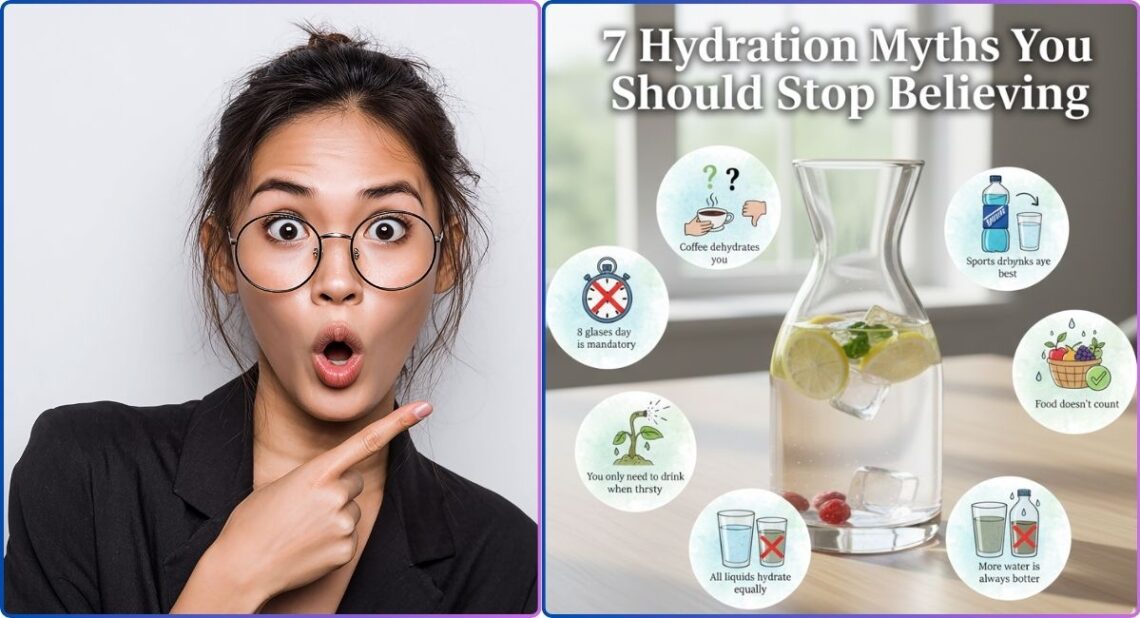
Water is essential for life, but how much do we really know about staying hydrated? From fitness enthusiasts to office workers, hydration is often discussed, yet many common beliefs about water and fluids are misleading. These myths shape our daily routines, but understanding the truth can improve health, energy levels, and overall wellness. In this article, we will explore seven hydration myths that many people still believe and reveal what science says about each one. Along the way, we will include practical water facts, tips for preventing dehydration, and links to resources that expand your understanding of wellness and eco-friendly practices.
Myth 1: You Must Drink Eight Glasses of Water a Day
The idea that everyone must drink eight glasses of water daily is widespread. It appears in health magazines, websites, and advice columns. However, the truth is more nuanced. Hydration needs depend on age, body size, activity level, climate, and diet. Many foods, including fruits and vegetables, contribute significantly to fluid intake. For example, cucumbers, oranges, and watermelon have high water content, meaning you may already be meeting hydration needs without drinking a full eight glasses.
Doctors recommend listening to your body. Thirst is a reliable signal, and urine color can be an indicator of hydration. Pale yellow urine generally shows adequate hydration, while dark yellow may indicate a need for more fluids. Understanding your unique needs helps you avoid unnecessary water consumption and supports balanced hydration. For eco-conscious hydration tips and broader wellness strategies, check out simple eco-friendly habits to start today.
Myth 2: Coffee and Tea Dehydrate You
Many people avoid coffee and tea because they believe caffeine causes dehydration. While caffeine has a mild diuretic effect, research shows moderate coffee or tea consumption contributes to daily fluid intake. Drinking a cup of coffee or tea can hydrate just like water. The key is moderation. Overconsumption of highly caffeinated beverages may increase fluid loss, but typical intake rarely causes dehydration. Incorporating these beverages wisely can keep you hydrated without sacrificing your routine or enjoyment.
Myth 3: Clear Urine Means Perfect Hydration
While urine color can indicate hydration, completely clear urine may not always be ideal. Extremely clear urine can signal overhydration, which can dilute electrolytes in the body and disrupt normal functions. Instead, aim for a pale yellow color. Drinking water consistently throughout the day is more effective than forcing large quantities at once. If you exercise heavily or live in a hot climate, combining water with electrolyte-rich fluids can prevent dehydration more effectively than plain water alone.
Myth 4: You Only Need Water When Thirsty
This myth partly stems from a misunderstanding of the body’s signaling system. Thirst can lag behind actual fluid needs. Mild dehydration often shows subtle signs, including headaches, fatigue, or difficulty concentrating, before thirst kicks in. Athletes or people working in hot environments should monitor fluid intake proactively. Small sips throughout the day can prevent noticeable dehydration symptoms. Pairing hydration with routine activities, like meals or breaks, ensures consistent fluid intake without overconsumption.
Myth 5: Sports Drinks Are Always Better for Hydration
Sports drinks are marketed as the best way to stay hydrated during exercise, but they are often unnecessary for casual or moderate activity. These drinks contain sugar, artificial flavors, and electrolytes designed for intense endurance activities lasting over an hour. For most people, water remains the healthiest option for regular hydration. If you exercise intensely or in extreme heat, sports drinks or electrolyte solutions can support hydration, but they are not a daily requirement. Learning when and how to use these drinks can help maintain balance and reduce sugar intake.
Myth 6: Drinking More Water Boosts Weight Loss
Water is vital for metabolism and overall health, but simply drinking more water does not guarantee weight loss. Proper hydration supports digestion, reduces bloating, and may help reduce cravings by creating a sense of fullness. However, drinking excessive amounts without adjusting diet or exercise will not cause fat loss. Combining hydration with mindful eating and activity supports sustainable weight management. To explore how mindful hydration ties into broader health habits, read mindful eating and hydration building a healthy bond with water.
Myth 7: All Bottled Water is Safer Than Tap Water
Bottled water is often seen as cleaner or safer than tap water, but this is not always the case. In the United States, tap water is rigorously tested and regulated to ensure safety. Many bottled waters come from municipal sources, making them similar to tap water. Choosing filtered tap water is often more sustainable and cost-effective than relying solely on bottled water. For tips on saving water at home and using eco-friendly options, visit simple ways to save water at home. Using reusable bottles and home filtration supports hydration while minimizing environmental impact.
How to Maintain Healthy Hydration
Understanding hydration myths helps, but practical strategies make staying hydrated easier. Here are some effective tips:
• Carry a reusable water bottle to track fluid intake.
• Eat water-rich foods like fruits, vegetables, and soups.
• Set reminders to drink water during busy workdays.
• Adjust intake based on activity level, weather, and personal health.
• Consider electrolyte solutions during prolonged exercise or high heat exposure.
• Pair hydration with meals to create a consistent routine.
Integrating these strategies with other wellness practices, such as hydration and mental clarity, can enhance focus, mood, and energy levels. Hydration is not only about water but about understanding how fluids, electrolytes, and healthy habits work together to support overall health.
Emerging Trends in Hydration and Wellness
As wellness continues to evolve, hydration research and products also advance. Innovations include electrolyte powders, water infusers, and smart water bottles that track intake. Many people are exploring natural hydration methods, combining water with herbal teas or fruit infusions. Eco-conscious approaches encourage reducing plastic use, filtering tap water at home, and integrating hydration into a sustainable lifestyle. For inspiration, explore eco-friendly wellness tips that tie hydration to broader sustainability practices.
Common Questions About Hydration
Q: How do I know if I am drinking enough water daily?
Check urine color, monitor thirst, and notice energy levels. Aim for consistent intake rather than forcing a specific number of glasses.
Q: Are there alternatives to plain water for hydration?
Yes, herbal teas, milk, smoothies, and water-rich foods all contribute to hydration.
Q: Can dehydration affect mental performance?
Even mild dehydration can reduce concentration, memory, and alertness, highlighting the importance of steady fluid intake.
Q: Should I avoid water before bed to prevent waking up at night?
Drink moderate amounts in the evening. Avoid excessive water right before sleep but maintain hydration throughout the day to prevent overnight dehydration.
Final Words
Hydration is more than a simple habit; it is a cornerstone of health, energy, and wellness. Debunking myths like rigid water rules, the dangers of coffee, or the necessity of sports drinks helps people create practical, sustainable routines. Staying hydrated involves listening to your body, incorporating water-rich foods, and using mindful strategies to prevent dehydration. Combining hydration with mental clarity, sustainable practices, and wellness routines supports both physical and mental health. To explore more wellness insights, visit the Aqua Wellness Hub homepage and discover guides on hydration, eco-friendly living, and overall health improvement.