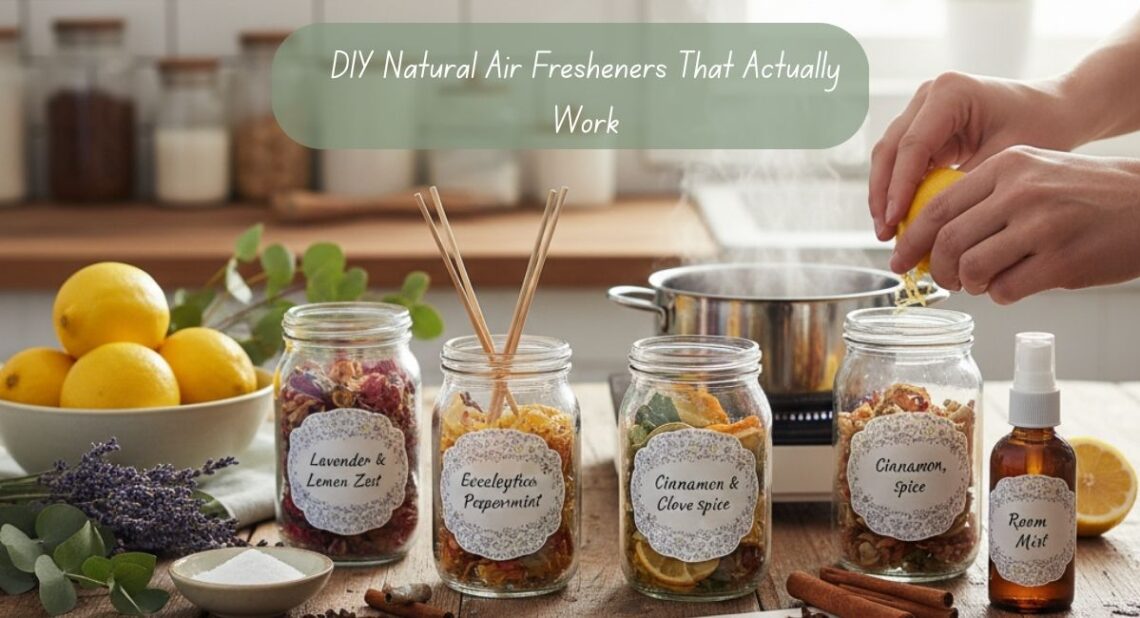
Creating a home that smells welcoming doesn’t have to involve chemical-laden sprays or synthetic candles. A clean, refreshing scent can come from ingredients you already have in your kitchen herbs, citrus, baking soda, and a few drops of essential oils. The idea of DIY natural air fresheners is more than just a fun home project. It’s about bringing nature into your living space in a way that feels authentic, affordable, and safe.
In recent years, people have grown more aware of what goes into commercial products. Air fresheners that promise “fresh linen” or “ocean breeze” often rely on artificial fragrances that mask odors instead of removing them. Many contain volatile organic compounds (VOCs) that linger in the air and can irritate sensitive lungs or trigger allergies. Homemade alternatives, however, use natural materials that neutralize odors and fill your home with subtle, real scents.
The best part? These fresheners truly work when you understand how to combine ingredients for long-lasting fragrance.
Why Choose Natural Air Fresheners
Switching to natural air fresheners is a small but meaningful step toward a healthier home. It reduces exposure to chemicals, helps the environment, and gives you total control over what fills your air.
Here are a few solid reasons why people are embracing this approach:
- No artificial chemicals: Essential oils and natural ingredients freshen air without synthetic additives.
- Budget-friendly: You can create several batches for the cost of one store-bought spray.
- Customizable scents: Mix and match oils and herbs to create your ideal aroma.
- Pet- and child-safe options: You can avoid ingredients that may irritate sensitive noses.
- Eco-conscious choice: Reuse glass jars, spray bottles, and reduce packaging waste.
Many of us spend most of our time indoors, where air quality matters just as much as cleanliness. Instead of covering up smells, natural air fresheners work to absorb, neutralize, and replace them with real aromas from plants, citrus, and spices.
The Power of Nature’s Chemistry
The reason natural air fresheners are effective lies in the science of their ingredients. Essential oils and organic substances contain natural compounds that do more than just smell pleasant — they actively cleanse and purify the air.
For instance:
- Lemon oil contains limonene, a compound known for cutting through odors and leaving a crisp scent.
- Lavender oil has linalool, which promotes calmness while adding a gentle floral aroma.
- Tea tree oil offers antibacterial benefits, ideal for bathrooms and kitchens.
- Eucalyptus oil helps eliminate mildew and adds a clean, spa-like scent.
When blended carefully, these oils interact with the air, binding with odor molecules and neutralizing them instead of masking them. That’s what gives homemade air fresheners their staying power — real chemistry doing the work naturally.
Common Ingredients and Their Roles
Here’s a quick table that breaks down some of the most useful ingredients and their specific roles in natural air freshening.
| Ingredient | Function | Best For | Notes |
| Baking soda | Absorbs odors | Jars, carpets, shoes | Replace monthly |
| White vinegar | Neutralizes smells | Cleaning sprays | Pair with citrus |
| Essential oils | Adds scent, purifies air | Sprays, diffusers | Use pure oils only |
| Citrus peels | Adds fresh aroma | Simmer pots, sachets | Dry them for reuse |
| Vodka or rubbing alcohol | Helps oils mix and preserve | Room sprays | Acts as natural preservative |
| Herbs (mint, rosemary) | Adds herbal notes | Sachets, simmer pots | Fresh or dried both work |
| Gelatin | Thickens mixtures | Gel air fresheners | Natural and biodegradable |
These ingredients form the foundation of nearly every effective DIY air freshener recipe, and they’re incredibly versatile. You can adjust them based on personal preference, the season, or even the specific room you’re freshening.
Simple Ways to Make Natural Air Fresheners at Home
Homemade air fresheners can be sprays, gels, jars, or even simmering pots on the stove. Each type has its charm and fits a different need in your home. Let’s explore a few effective and easy-to-make varieties.
1. Natural Room Sprays
Room sprays are quick, adjustable, and can instantly change the mood of a room.
You’ll need:
- 1 cup distilled water
- 2 tablespoons vodka or rubbing alcohol
- 10–15 drops of your favorite essential oils
- 1 glass spray bottle
Directions:
- Combine alcohol and essential oils in the bottle first.
- Add distilled water and shake thoroughly.
- Spray around your home as needed, avoiding direct contact with delicate fabrics.
Suggested scent blends:
- Citrus Morning: Lemon, orange, and grapefruit oils
- Evening Calm: Lavender, vanilla, and chamomile
- Clean Linen: Eucalyptus, tea tree, and lemon
These sprays can last up to six weeks when stored in a cool, dark place.
2. Baking Soda Odor Absorbers
Baking soda is one of the most effective natural deodorizers. It works by absorbing and neutralizing odors rather than covering them.
How to make it:
- Fill a small mason jar halfway with baking soda.
- Add 10–12 drops of essential oil.
- Cover the jar with breathable cloth or paper and secure it with a rubber band.
- Shake occasionally to refresh the scent.
You can place these jars in shoe closets, near trash bins, or in bathrooms. Replace the baking soda once a month for best results.
3. Simmer Pots for Whole-Home Freshness
Simmer pots are perfect for when you want to infuse your entire home with a natural, comforting scent.
What to do:
- Fill a saucepan with water.
- Add slices of lemon or orange, a handful of herbs like rosemary, and a few cinnamon sticks.
- Let it simmer gently on low heat.
As the mixture warms, fragrant steam will circulate through your space. You can reuse the same mix by refrigerating it and reheating it the next day.
Tip: Try combinations like orange and clove in winter or lemon and mint in summer for seasonal freshness.
4. Gel Air Fresheners
These are decorative, long-lasting, and perfect for small spaces like bathrooms or closets.
You’ll need:
- 1 cup water
- 2 packets of unflavored gelatin
- 1 tablespoon salt
- 15–20 drops essential oil
- Optional: dried flowers or food coloring
Steps:
- Heat half the water and dissolve gelatin completely.
- Add remaining water, salt, and oils.
- Pour into small jars and let it cool.
- Once set, place around your home for slow scent release.
They usually last about a month, depending on humidity.
5. Reed Diffusers
Reed diffusers provide a continuous fragrance without electricity or flames.
Ingredients:
- Small glass jar
- ¼ cup light carrier oil (like safflower or almond)
- 15 drops essential oil
- Reed sticks or bamboo skewers
Mix the oils in the jar and insert reeds. Flip them every few days to refresh the scent.
Blends to try:
- Lemon and basil for kitchens
- Peppermint and eucalyptus for bathrooms
- Lavender and chamomile for bedrooms
Tips for Making Scents Last Longer
Homemade air fresheners may not last as long as synthetic ones, but a few simple tricks can extend their lifespan.
- Store sprays and oils in dark glass containers away from sunlight.
- Use base note oils like cedarwood, vanilla, or patchouli to anchor lighter scents.
- Keep your home ventilated to prevent scent buildup.
- Add a little salt to help preserve your mixtures.
- Refresh your sprays every few weeks by adding a few new drops of essential oil.
The longevity of natural scents depends largely on your ingredients, storage, and environment, so some experimentation helps you find the right balance.
Seasonal Scent Inspiration
Changing your scent blends throughout the year keeps things interesting and connects your home to the seasons.
| Season | Scent Profile | Suggested Ingredients |
| Spring | Floral and herbal | Lavender, mint, lemon |
| Summer | Fresh and tropical | Lime, coconut, eucalyptus |
| Fall | Warm and spicy | Cinnamon, orange, clove |
| Winter | Cozy and woodsy | Pine, vanilla, nutmeg |
These combinations make your home smell naturally inviting and help you embrace the atmosphere of each season.
Eco-Friendly and Sustainable Practices
Creating homemade air fresheners is part of a larger movement toward natural living. By reusing materials and avoiding synthetic chemicals, you’re making a conscious choice to live sustainably.
Here are a few small habits that make a difference:
- Use recyclable glass jars instead of plastic.
- Compost herbs and citrus peels when you’re done.
- Choose organic essential oils from ethical sources.
- Refill bottles instead of buying new ones.
- Label your jars to track freshness and prevent waste.
Every refill or reuse contributes to less waste and a cleaner environment.
Common Mistakes to Avoid
It’s easy to get excited and experiment with scents, but a few missteps can affect results.
- Adding too much essential oil can overwhelm your senses. Start with small amounts.
- Avoid using plastic containers; oils can degrade them over time.
- If your air freshener contains water, add a little alcohol or salt to extend its life.
- Always test scents before using them in large amounts.
- Remember that even natural scents should be used moderately, fresh air and cleanliness are just as important.
Creating Your Own Signature Scent
Personalized scent blending is what makes natural air fresheners fun. You can experiment with top, middle, and base notes to craft a balanced, memorable aroma.
| Note Type | Role | Common Oils |
| Top Note | Light, first impression | Lemon, peppermint, orange |
| Middle Note | Heart of the scent | Lavender, rosemary, geranium |
| Base Note | Deep, long-lasting | Vanilla, cedarwood, sandalwood |
Sample recipe:
- 5 drops lemon (top note)
- 3 drops lavender (middle note)
- 2 drops vanilla (base note)
This blend creates a balanced scent that’s fresh, calm, and slightly sweet perfect for any room.
Health Benefits of Natural Scents
Besides smelling pleasant, many essential oils offer benefits that support overall well-being. Incorporating them into your home air can subtly improve mood and comfort.
- Lavender: Reduces stress and helps relaxation.
- Peppermint: Boosts focus and clears the mind.
- Eucalyptus: Opens airways and freshens air.
- Citrus oils: Improve mood and increase energy.
- Rosemary: Helps with mental clarity and alertness.
Always use essential oils responsibly. Keep them out of reach of children and pets, and dilute them properly before use.
Storage and Maintenance
Proper storage helps keep your DIY fresheners effective for longer.
- Store all air fresheners in cool, dark places.
- Label containers with creation dates.
- Use amber or cobalt glass bottles to prevent light degradation.
- Clean bottles and jars thoroughly before refilling.
- Refresh your scents every month or two to maintain potency.
Taking these small steps ensures that your natural products stay fresh and functional.
Cost Comparison: DIY vs. Store-Bought
Making your own air fresheners is not only healthier but also more affordable over time.
| Type | Average Cost | Duration | Chemical-Free | Customizable |
| Store-Bought Spray | $6–$10 | 2–4 weeks | No | No |
| DIY Room Spray | $1–$3 | 3–6 weeks | Yes | Yes |
| DIY Gel Freshener | $2 | 1–2 months | Yes | Yes |
| Reed Diffuser (DIY) | $5 | 2–3 months | Yes | Yes |
With simple ingredients and reusable containers, you save money while keeping your air clean and naturally scented.
FAQs about DIY Natural Air Fresheners
Q1: How long do natural air fresheners last?
Room sprays typically last a few weeks, while gels and diffusers can last one to three months depending on the environment.
Q2: Can I use fragrance oils instead of essential oils?
You can, but fragrance oils are synthetic. If your goal is an all-natural product, stick to essential oils.
Q3: Are these air fresheners safe around pets?
Some essential oils can be harmful to animals. Lavender and chamomile are safer options, but always research before using around pets.
Q4: What’s the best way to remove strong odors naturally?
Baking soda jars or vinegar-based sprays work best for neutralizing strong smells like smoke or food odors.
Q5: Can I use these air fresheners in my car?
Yes, small gel jars or baking soda containers work perfectly in cars. Avoid using strong sprays in confined spaces.
Q6: What’s the shelf life of homemade sprays?
They usually last 4–6 weeks if kept in a cool, dark place. Adding a bit of vodka helps preserve them.
Q7: Can I mix multiple essential oils?
Absolutely. Mixing oils is how you create layered, complex scents that feel more natural.
Final Thoughts
Making DIY natural air fresheners that actually work is more than a fun project, it’s a simple way to create a cleaner, healthier environment. By choosing natural ingredients, you’re not only improving your indoor air but also supporting sustainable living.
The process is flexible, creative, and deeply satisfying. You get to decide how your home smells, what goes into your products, and how often you use them. Whether it’s a refreshing citrus spray in the morning or a cozy cinnamon simmer pot on a winter evening, natural scents bring warmth and authenticity that no artificial product can match.
A naturally scented home doesn’t require effort or expense just curiosity, a few ingredients, and a bit of time. Once you experience how well these DIY air fresheners work, you might never go back to store-bought again.