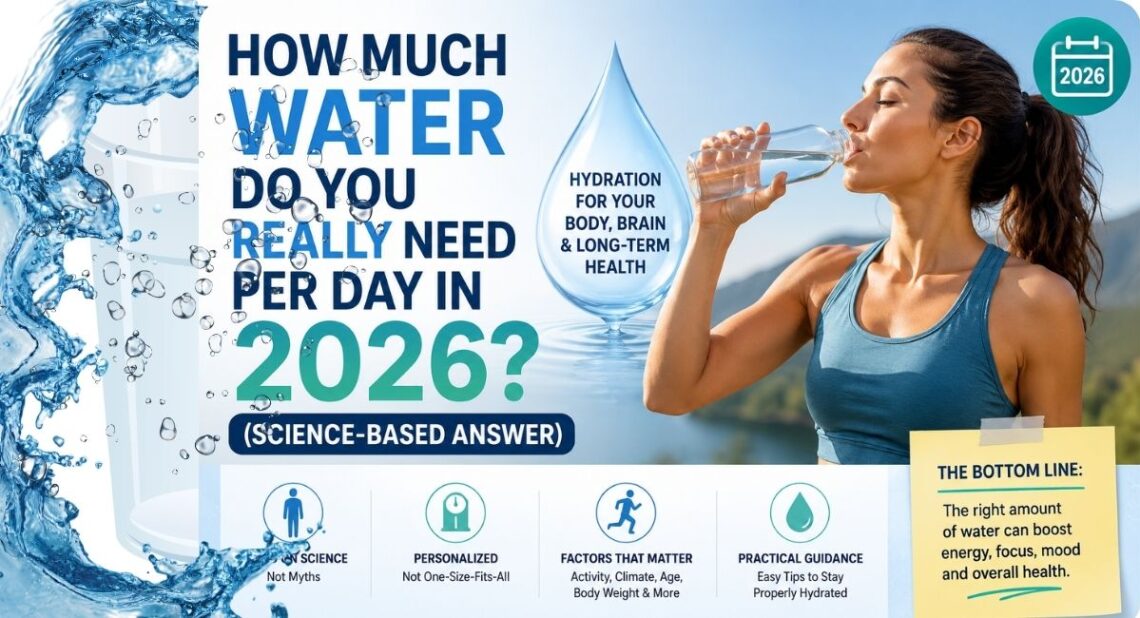
Water is still one of the most discussed health topics, yet it remains one of the most misunderstood. In 2026, nutrition science no longer supports a single universal rule for hydration. Instead, research shows that daily water intake depends on how your body functions in real conditions, not a fixed number written on a chart.
Hydration is a moving balance. It shifts based on activity, environment, food choices, stress levels, and even how much time you spend indoors. So the real question is not “how much water per day is correct,” but how your body maintains stable hydration throughout the day.
What Daily Water Intake Really Means Today
Modern science looks at hydration in a broader way than most people expect. Your water requirement is not just about what you drink in a bottle.
It includes:
- Plain drinking water
- Tea, coffee, and other beverages
- Water-rich foods like fruits and vegetables
- Soups and cooked meals
This is why many people already meet a large portion of their hydration needs without actively tracking every glass.
Foods like watermelon, cucumbers, oranges, and leafy greens quietly contribute to hydration throughout the day, making water intake more of a total lifestyle pattern than a single habit.
Why the “8 Glasses a Day” Rule Does Not Fit Everyone
The idea that everyone should drink eight glasses of water daily is outdated. It was never designed from personalized science, but from simplified public health messaging.
It ignores important differences such as:
- Body size and muscle mass
- Daily movement and exercise
- Climate and humidity levels
- Diet composition and salt intake
- Individual metabolism and health conditions
This is why two people living in the same city can have completely different hydration needs.
A better approach is understanding your own patterns rather than forcing a universal number.
Science-Based Hydration Ranges in Real Life
Instead of strict targets, modern research uses average ranges:
- Women: around 2.7 liters of total water per day
- Men: around 3.7 liters of total water per day
But these numbers include everything from food to beverages, not just plain water.
For drinking water alone, many adults typically fall between:
- 1.5 to 2.5 liters per day in normal conditions
- More during heat, exercise, or physical labor
These are flexible ranges, not fixed rules.
Hydration is more about balance than hitting exact measurements.
What Changes Your Water Requirement Daily
Your hydration needs can change from one day to the next without warning. This is one of the most important ideas in modern nutrition science.
Key factors include:
- Physical activity and sweat loss
- Hot or humid weather conditions
- Indoor heating or air conditioning
- High-salt or high-protein meals
- Stress levels and sleep quality
- Body composition and muscle mass
Even a simple change like walking more than usual or spending extra time outdoors can increase your water needs for the day.
How Your Body Signals Hydration Levels
One of the biggest misconceptions is that thirst is the first warning sign. In reality, thirst is often a delayed signal.
Earlier signs of low hydration can include:
- Low focus or mental fog
- Sudden tiredness during the day
- Mild headaches
- Dry lips or mouth
- Slower physical performance
Research also links hydration with cognitive function. Even small fluid loss can affect attention and memory performance, which is why hydration is closely tied to productivity.
You can explore this connection further in this guide on hydration and mental clarity.
A Simple Way to Check Hydration Without Overthinking
One of the easiest real-world indicators is urine color:
- Light yellow: balanced hydration
- Dark yellow: likely underhydration
- Very clear: possibly too much water intake
It is not a perfect system, but it is a practical everyday guide that reflects how your body is doing internally.
How Much Water You Need Based on Lifestyle
Hydration is closely tied to how you live each day.
Office or low-activity lifestyle
Most people in this category need moderate hydration levels. Around 1.5 to 2 liters of water per day is often enough, but indoor heating, stress, and screen time can still increase needs.
Active lifestyle or exercise routines
Exercise increases fluid loss through sweat. Depending on intensity:
- Light activity may require an extra 300–500 ml
- Moderate workouts may require 500–1000 ml
- High-intensity training may require even more
Hydration before and after activity becomes more important than total daily counting.
Hot climates or outdoor work
Heat increases water loss even without exercise. In these conditions, hydration becomes continuous rather than occasional.
Foods That Support Hydration Naturally
Water intake is not only about drinking. Many foods contribute significantly to hydration.
Examples include:
- Watermelon and oranges
- Cucumbers and celery
- Strawberries and leafy greens
- Yogurt and broth-based soups
This is why diet quality directly affects hydration balance.
A balanced lifestyle that includes whole foods can reduce the pressure to constantly drink large amounts of water.
Common Hydration Misunderstandings
Even today, several myths continue to confuse people.
Drinking more water is always better
Excess water in a short time can disrupt electrolyte balance. Balance is more important than volume.
Coffee and tea dehydrate the body
Moderate caffeine intake does not significantly dehydrate healthy adults and still contributes to total fluid intake.
Everyone needs the same amount of water
Hydration varies widely between individuals. There is no universal number that fits everyone.
More detailed misconceptions are also explained in this guide on hydration myths and practical tips.
Hydration and Mental Performance
Water is not only important for physical health. It directly affects how your brain works.
Even mild dehydration can influence:
- Concentration and focus
- Short-term memory
- Mood stability
- Decision-making speed
This is why people often feel tired or mentally slow when they are not properly hydrated.
Simple Hydration Habits That Actually Work
Instead of tracking exact numbers, consistency matters more.
You can build hydration into your day by:
- Drinking water after waking up
- Having water with meals
- Sipping during work breaks
- Rehydrating after movement or walking
- Adjusting intake in hot weather
This makes hydration part of your routine instead of a task to monitor constantly.
The Real Answer to Daily Water Intake in 2026
There is no single perfect number for how much water you should drink each day. Science now focuses on flexibility, not fixed rules.
Your daily water intake depends on how your body responds to:
- Activity levels
- Environment
- Food choices
- Internal hydration signals
If your energy is steady, your focus is clear, and your body feels balanced, your hydration is likely in a good range.
A helpful way to think about it is simple: your body loses water every day, and your goal is to replace what it uses without overthinking the process.
For a broader lifestyle approach to hydration habits, you can also explore guides like simple ways to save water at home and related wellness topics that connect hydration with daily living patterns.