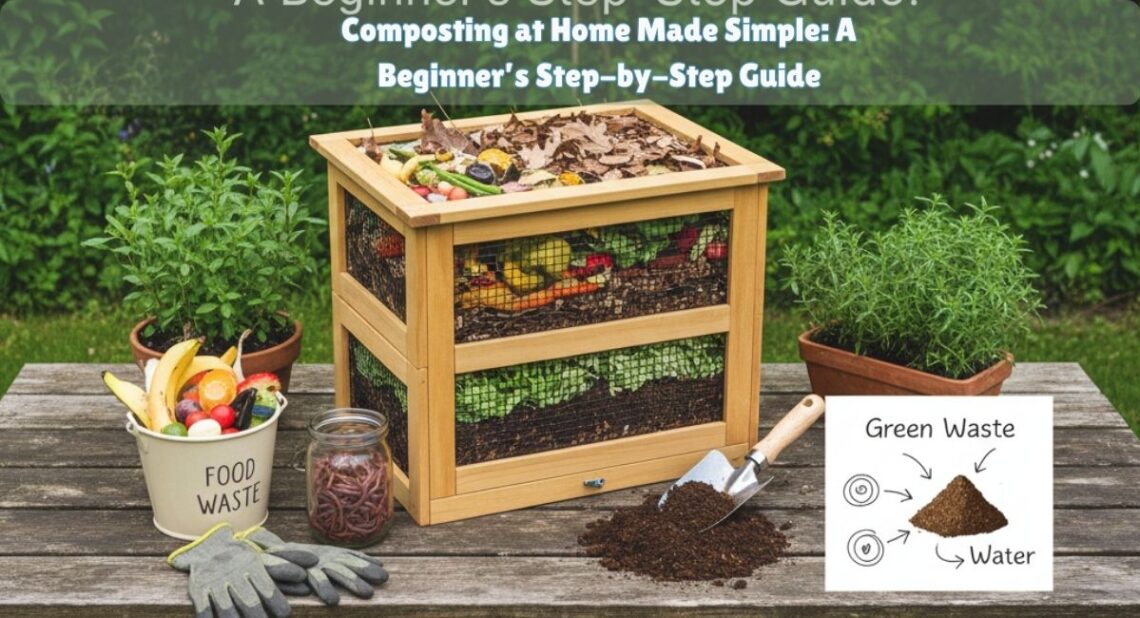
Composting at home is one of the most practical ways to reduce household waste while creating something useful for your garden, lawn, or indoor plants. Instead of throwing food scraps into the trash where they end up in landfills, you can turn everyday kitchen waste into organic compost that improves soil health and supports long-term sustainability. Many people assume composting is messy, complicated, or only for experienced gardeners. In reality, composting at home can fit into apartments, suburban homes, and even busy lifestyles with very little effort once you understand the basics.
This guide is written for beginners who want clear instructions without overwhelming technical language. It explains how composting works, what materials to use, how to avoid common mistakes, and how to make composting part of your daily routine. The goal is to help you build confidence, reduce waste, and reuse kitchen scraps in a practical way that actually works.
Understanding Composting and Why It Works
Composting is a natural process where organic materials break down into a dark, crumbly substance known as compost. This process happens when microorganisms such as bacteria and fungi feed on organic matter. With the right balance of air, moisture, and materials, these organisms convert food scraps and yard waste into a soil conditioner rich in nutrients.
When kitchen waste reuse becomes part of your routine, you help reduce the amount of waste sent to landfills. Food waste in landfills releases methane, a greenhouse gas that contributes to environmental problems. Composting at home reduces that impact while giving you organic compost that improves soil structure, supports beneficial microbes, and helps plants grow stronger.
Compost improves soil in several ways:
- It adds nutrients slowly over time, unlike synthetic fertilizers
- It helps soil retain moisture
- It improves drainage in heavy soils
- It supports earthworms and beneficial insects
- It reduces the need for chemical inputs
Many people begin composting because they want to live more sustainably. If you are already working toward eco-friendly habits, composting pairs well with practices discussed in this guide on simple eco-friendly habits to start today.
Choosing the Right Composting Method for Your Home
Before starting, it helps to understand the different composting methods and choose one that fits your space and lifestyle. Composting at home does not require a large backyard or expensive equipment.
Backyard Composting
This is the most common method for people with outdoor space. A compost pile or bin sits directly on soil, allowing worms and microbes to enter easily. Backyard composting works well for households that produce yard waste along with kitchen scraps.
Compost Bins and Tumblers
Compost bins keep materials contained and tidy. Tumblers make it easier to turn compost, which speeds up the breakdown process. These are good options if you want faster results or a cleaner setup.
Indoor Composting
Indoor composting often uses small bins or bokashi systems. These systems work well in apartments or homes without outdoor space. With proper care, indoor composting does not smell.
Worm Composting
Also known as vermicomposting, this method uses worms to break down kitchen waste. Worm bins can be kept indoors or outdoors and are ideal for people who want nutrient-rich compost quickly.
The table below compares common composting methods to help beginners decide.
| Composting Method | Space Needed | Odor Control | Speed | Best For |
| Backyard pile | Medium to large | Moderate | Medium | Homes with yards |
| Compost bin | Small to medium | Good | Medium | Organized outdoor setups |
| Compost tumbler | Small | Very good | Fast | Busy households |
| Indoor compost bin | Very small | Excellent | Slow to medium | Apartments |
| Worm composting | Small | Excellent | Fast | Kitchen waste reuse |
What to Compost and What to Avoid
Knowing what goes into your compost bin is one of the most important steps. Compost materials are usually divided into two groups known as greens and browns.
Green Materials
These are rich in nitrogen and help heat up the compost pile.
- Fruit and vegetable scraps
- Coffee grounds and filters
- Tea leaves
- Fresh grass clippings
- Plant trimmings
Brown Materials
These provide carbon and help balance moisture.
- Dry leaves
- Shredded paper and cardboard
- Egg cartons
- Straw
- Wood chips
A healthy compost pile needs a balance of both. Too many greens can cause odors. Too many browns slow down decomposition.
Materials to Avoid
Some items attract pests or slow the composting process.
- Meat and fish scraps
- Dairy products
- Oily or greasy foods
- Pet waste
- Treated wood
- Plastic or synthetic materials
This simple table helps beginners remember what belongs in compost.
| Compost It | Skip It |
| Vegetable scraps | Meat and bones |
| Coffee grounds | Cheese and milk |
| Paper towels | Greasy foods |
| Yard waste | Plastic wrappers |
If your goal is creating a zero-waste kitchen, composting works best when combined with mindful purchasing and storage habits. You may find this guide helpful.
Setting Up Your Composting System Step by Step
Starting composting at home does not require advanced tools. A basic setup can be completed in less than an hour.
Step 1: Pick a Location
Choose a spot that is easy to access. Outdoor compost bins should sit on soil, not concrete, to allow drainage and organisms to enter. Indoor bins should be placed away from direct heat.
Step 2: Prepare Your Bin
If using a store-bought bin, follow the instructions. If making your own, drill small holes for airflow. Air is essential for decomposition.
Step 3: Add a Base Layer
Start with brown materials such as dry leaves or shredded cardboard. This helps airflow and prevents sogginess.
Step 4: Add Kitchen Waste
Add fruit and vegetable scraps in small amounts. Chop large pieces to speed up breakdown.
Step 5: Cover with Browns
Always cover food scraps with brown materials to reduce odor and pests.
Step 6: Maintain Moisture
Compost should feel like a damp sponge. If it is too dry, add water. If too wet, add more browns.
Step 7: Turn the Pile
Mix or turn compost every one to two weeks. This introduces air and helps even decomposition.
Consistency matters more than perfection. Composting at home becomes easier once it becomes part of your routine, just like recycling or saving water at home.
How Long Composting Takes and What to Expect
The time required to produce organic compost depends on several factors:
- Size of materials
- Balance of greens and browns
- Temperature
- Moisture level
- Frequency of turning
In general:
- Hot composting can produce compost in two to three months
- Cold composting may take six months to a year
- Worm composting often produces usable compost in two to three months
You will know compost is ready when it looks dark, smells earthy, and no longer resembles the original materials.
Common Composting Problems and Simple Solutions
Every beginner faces challenges. Most issues have simple fixes.
Bad Smell
This usually means too many greens or not enough air. Add brown materials and turn the pile.
Pests
Cover food scraps with browns and avoid meat or dairy.
Slow Decomposition
Chop materials smaller, add greens, and turn more often.
Too Wet
Add shredded cardboard or dry leaves.
Too Dry
Add water gradually and mix well.
The table below summarizes common problems.
| Problem | Likely Cause | Easy Fix |
| Odor | Excess moisture | Add browns |
| Flies | Exposed food | Cover scraps |
| Slow compost | Lack of nitrogen | Add greens |
| Dry pile | Low moisture | Light watering |
Using Finished Compost Around Your Home
Once your compost is ready, it can be used in many ways.
- Mix into garden soil
- Spread around trees and shrubs
- Add to potting soil for houseplants
- Use as mulch
- Improve lawn soil health
Compost works well with indoor plants that support cleaner air and better living spaces. For plant ideas, see.
Composting as Part of a Sustainable Lifestyle
Composting at home supports a larger goal of sustainable living. When combined with energy-saving practices, eco-friendly cleaning, and water conservation, composting helps reduce household impact without major lifestyle changes.
You can explore related topics here:
- Why sustainable living feels manageable
- Eco-friendly cleaning product options
- DIY projects that support greener
Each of these habits complements kitchen waste reuse and organic composting efforts.
Composting Safety and Hygiene Tips
While composting is safe, basic hygiene matters.
- Wash hands after handling compost
- Keep bins closed
- Avoid composting pet waste
- Store kitchen scraps in sealed containers before adding to compost
If composting indoors, use bins with charcoal filters and empty them regularly.
Composting Myths That Stop Beginners
Many beginners hesitate due to misinformation.
- Composting does not require a large garden
- Composting does not attract pests if done correctly
- Composting does not smell when balanced
- Composting does not take daily effort
Understanding these points helps build confidence.
Frequently Asked Questions About Composting at Home
Is composting at home safe in small apartments?
Yes. Indoor compost bins and worm systems are designed for limited spaces and proper odor control.
How much kitchen waste can I compost daily?
Most households can compost all fruit and vegetable scraps produced each day if balanced with browns.
Can compost replace fertilizer completely?
Compost improves soil health but may not replace all nutrients for heavy-feeding plants. Many gardeners use both.
What if I forget to turn my compost?
Turning helps but is not mandatory. Compost will still break down over time.
Is composting allowed in all cities?
Most areas allow home composting. Some offer municipal composting programs as well.
Can composting reduce household trash significantly?
Yes. Food waste often makes up a large portion of household trash, so composting can reduce waste by a noticeable amount.
Final Thoughts on Getting Started
Composting at home is one of the most realistic ways to reduce waste and reuse kitchen scraps without changing your entire lifestyle. With a simple setup, basic knowledge, and consistent habits, anyone can produce organic compost that benefits plants and soil. Whether you live in an apartment or a house with a yard, composting fits into everyday routines and supports long-term environmental goals.
Start small, learn as you go, and let nature do most of the work.
Meta Description
Composting at home made simple with step-by-step guidance, material lists, problem fixes, and practical tips to turn kitchen waste into healthy organic compost.